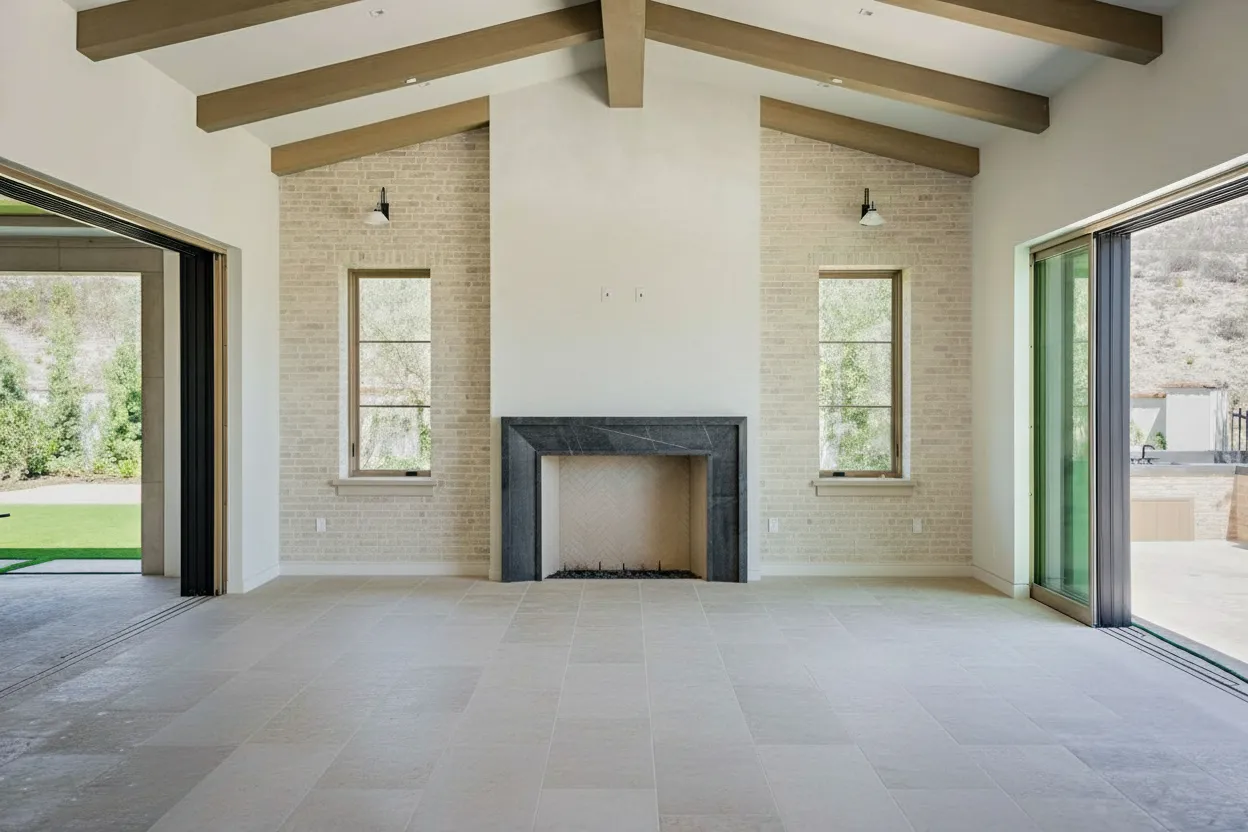
10 Inspiring Living Room Decor Ideas to Transform Your Space
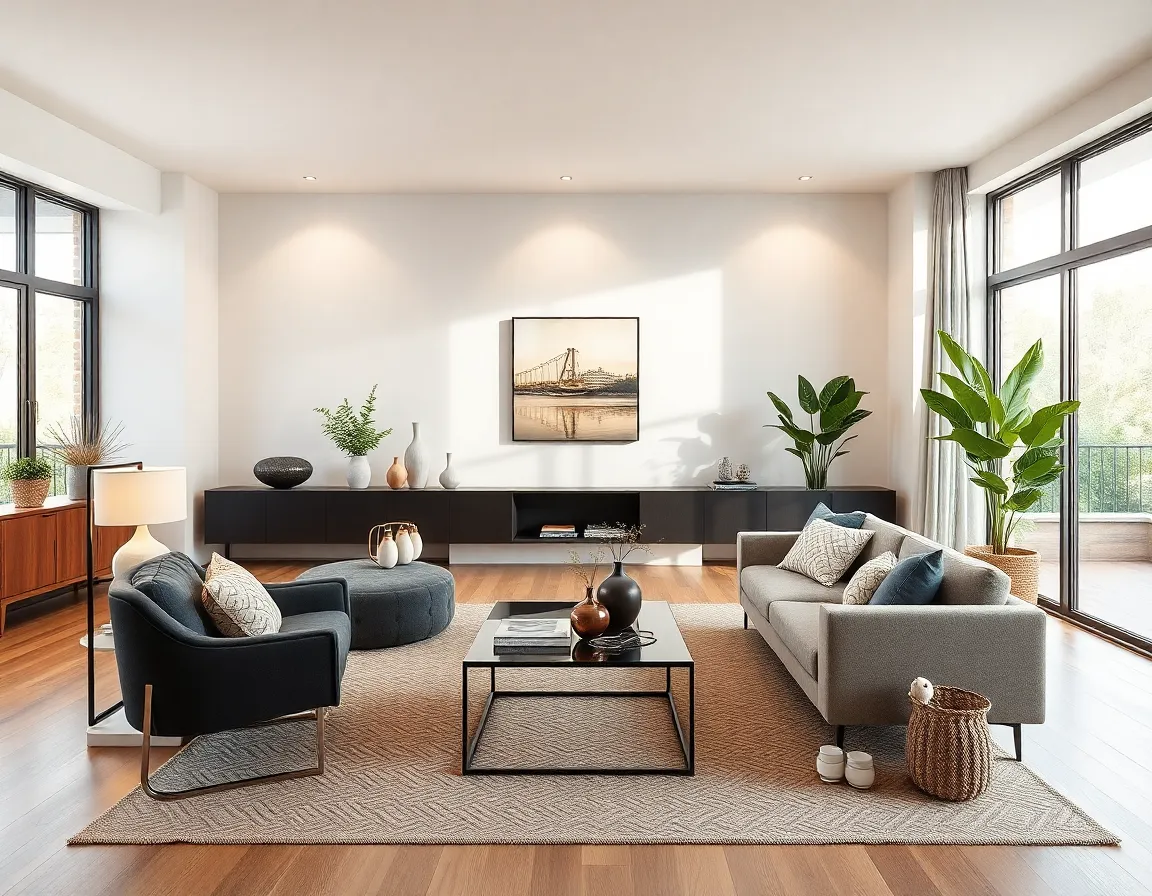
Your living room serves as the heart of your home—it’s where you unwind after a long day, entertain guests, and create lasting memories with loved ones. Whether you’re looking to completely overhaul your space or simply refresh its look, the right decor choices can dramatically transform the atmosphere and functionality of your living area. In this comprehensive guide, we’ll explore 10 inspiring living room decor ideas that cater to various styles, preferences, and budgets, helping you create a space that truly reflects your personality while maximizing comfort and aesthetic appeal.
1. Strategic Furniture Arrangement for Better Flow
The foundation of any well-designed living room begins with thoughtful furniture placement. How you arrange your furniture directly impacts both the functionality and visual appeal of your space.
Assess Your Space and Create a Plan
Before purchasing new pieces or rearranging existing ones, take measurements of your living room and sketch a rough floor plan. Consider traffic flow, natural focal points (like fireplaces or windows), and how you typically use the space.
💡 Pro Tip: Leave at least 30-36 inches of walking space between furniture pieces to ensure comfortable movement throughout the room. For conversation areas, keep seating within 8 feet of each other to facilitate easy communication.
Conversation-Focused Layouts
Create intimate conversation areas by positioning seating to face each other rather than lining everything against walls. This approach works particularly well in larger spaces or open-concept homes.
- 🎨 Position a sofa and two chairs around a coffee table to create a natural gathering spot
- 🎨 For larger rooms, consider creating multiple seating zones with distinct purposes
- 🎨 Use area rugs to visually define and anchor different functional areas
According to Houzz, “A well-designed living room layout considers both functionality and the inhabitants’ lifestyle needs.” Their research shows that balanced furniture arrangements can make rooms appear up to 30% more spacious.
Furniture Recommendations by Budget:
- 🔵 Budget-Friendly (under $50): IKEA LACK side tables, Target throw pillows, or room divider screens
- 🟡 Mid-Range ($50-200): Wayfair accent chairs, ottomans with storage, or floating shelves
- 🟢 Premium ($200+): West Elm modular seating, custom built-ins, or statement coffee tables
2. Layer Your Lighting for Depth and Ambiance
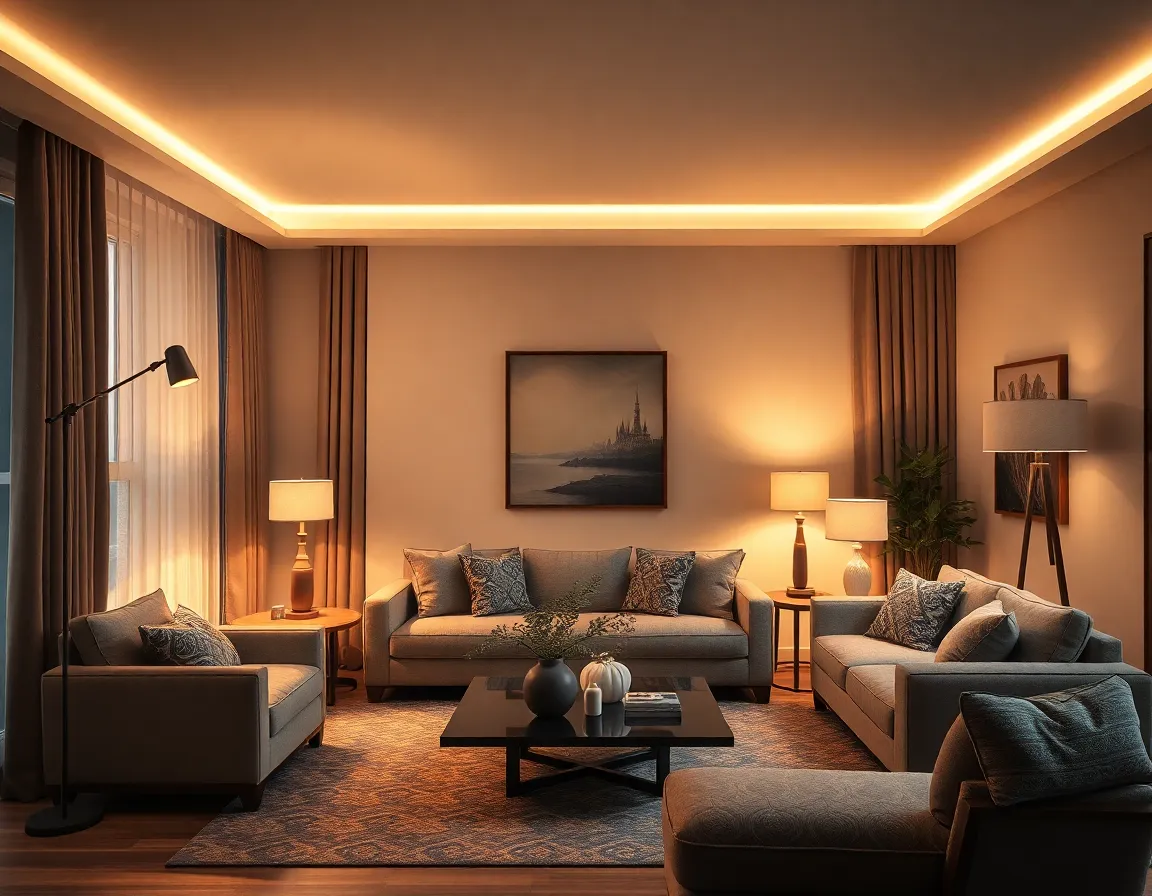
Great lighting transforms a living room from flat and uninspiring to dynamic and inviting. The key is layering different types of lighting to serve various needs throughout the day.
The Three Essential Lighting Types
Every well-designed living room incorporates these three lighting categories:
- Ambient (General) Lighting: Provides overall illumination—typically ceiling fixtures, recessed lighting, or track lighting
- Task Lighting: Focused light for specific activities like reading or working—includes table lamps, floor lamps, and adjustable fixtures
- Accent Lighting: Highlights architectural features or decor elements—achieved with wall sconces, picture lights, or LED strips
💡 Pro Tip: Install dimmer switches for your overhead lighting to easily adjust the mood of your space. Smart bulbs from brands like Philips Hue allow you to control brightness and even color temperature from your phone.
Quick Implementation Guide:
- Add floor lamps to dark corners to eliminate shadows and create balance
- Place table lamps on side tables for convenient reading light
- Install wall sconces to free up surface space in smaller rooms
- Use LED strip lights behind the TV or under shelving for ambient glow
According to This Old House, “Proper lighting can make a room appear up to 30% larger and significantly impact perceived comfort levels.”
3. Incorporate Statement Pieces That Reflect Your Personality
Every memorable living room features at least one conversation-starting element that captures attention and expresses the homeowner’s unique style.
Finding Your Statement Piece
Your statement piece could be:
- A bold, oversized piece of artwork
- An unusual or vintage furniture item
- A dramatic light fixture
- A vibrant area rug with an eye-catching pattern
- A gallery wall showcasing personal photos or collected art
When selecting a statement piece, choose something that resonates with you personally rather than following trends. The most compelling spaces tell a story about their inhabitants.
Balance is Key
While statement pieces should command attention, they need to work harmoniously with the rest of your decor. Consider these balancing strategies:
- If your statement piece is colorful, keep surrounding elements more neutral
- If it’s large and architectural, provide adequate negative space around it
- If it’s a pattern, balance with solid colors in complementary tones
Apartment Therapy suggests that “the most successful statement pieces either complement your existing color scheme or introduce a controlled accent color that’s repeated minimally elsewhere in the room.”
4. Embrace Color Psychology for Mood Enhancement
Colors profoundly affect our emotions and perceptions, making your color palette one of the most impactful design decisions for your living room.
Color Selection Based on Desired Mood
- Blues and Greens: Create calm, relaxing environments—ideal for unwinding
- Warm Neutrals: Foster comfort and welcome—perfect for entertaining spaces
- Yellow and Orange: Stimulate conversation and energy—great for social areas
- Deep Jewel Tones: Add sophistication and intimacy—wonderful for evening ambiance
- Soft Pastels: Promote lightness and airiness—excellent for small spaces
💡 Pro Tip: Before committing to a wall color, test paint samples on different walls and observe how they look throughout the day as natural light changes. Sherwin-Williams offers peel-and-stick color samples that make this process mess-free.
The 60-30-10 Rule
For a balanced color scheme:
- 60% of the room should be your dominant color (walls, large furniture)
- 30% should be your secondary color (accent furniture, curtains)
- 10% should be your accent color (accessories, artwork)
This formula creates visual interest while maintaining harmony. According to color experts at Benjamin Moore, “A well-executed color scheme can make rooms appear larger, ceilings higher, and create visual connections between separate spaces.”
5. Mix Textures for Dimension and Visual Interest
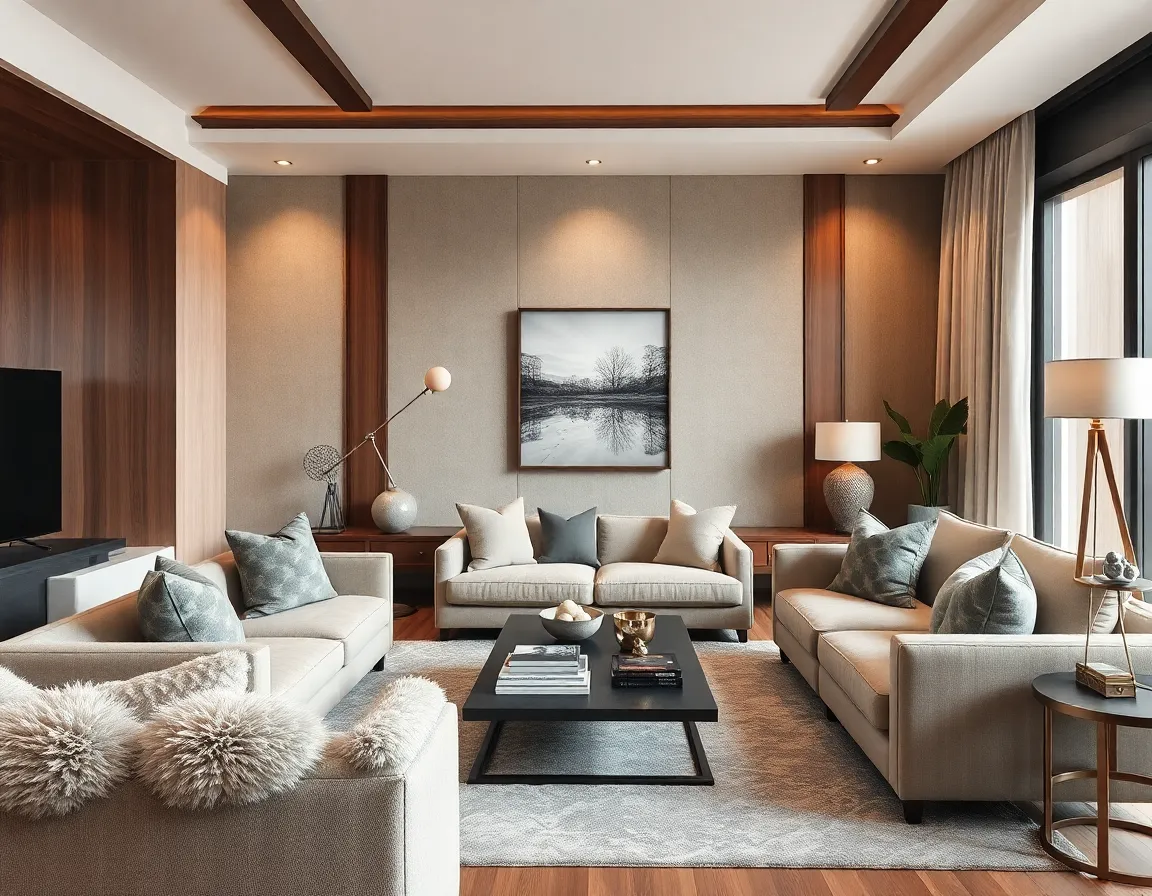
One of the most effective ways to elevate your living room design is by incorporating a variety of textures that create tactile and visual depth.
Essential Textures to Consider
- Soft Textiles: Velvet pillows, wool throws, shaggy rugs
- Natural Elements: Wooden furniture, stone accents, plants
- Woven Materials: Rattan, jute, macramé, basket weave
- Smooth Surfaces: Glass, polished metals, lacquered finishes
- Rough Textures: Brick, concrete, distressed wood
Simple Ways to Add Texture
- 🏠 Layer different fabric weights in your window treatments
- 🏠 Mix metallic finishes among your decorative accessories
- 🏠 Combine different wood tones in your furniture selections
- 🏠 Add textured wallpaper to a single accent wall
- 🏠 Incorporate plants of varying leaf shapes and sizes
Interior designers from Elle Decor emphasize that “texture is what makes a room memorable. Without it, spaces fall flat and lack the dimension that makes them interesting.”
Budget-Friendly Texture Additions:
- 🔵 Budget-Friendly (under $50): Textured throw pillow covers, small woven baskets, or ceramic vases
- 🟡 Mid-Range ($50-200): CB2 textured area rugs, macramé wall hangings, or velvet accent pillows
- 🟢 Premium ($200+): Leather poufs, stone coffee tables, or sculptural wood accents
6. Create Visual Balance Through Thoughtful Styling
Achieving visual balance in your living room requires attention to proportion, symmetry, and arrangement of decorative elements.
Types of Balance to Consider
- Symmetrical Balance: Identical or very similar elements on either side of a central point—creates formality and order
- Asymmetrical Balance: Different elements that carry equal visual weight—creates dynamic interest
- Radial Balance: Elements arranged around a central focal point—creates a sense of movement
Practical Styling Tips
- Group accessories in odd numbers (3, 5, 7) for more natural arrangements
- Vary heights when displaying objects on shelves or tables
- Balance heavy furniture with lighter visual elements elsewhere
- Use the rule of thirds when arranging wall art
- Consider scale—large rooms need larger or grouped decorative elements
According to Architectural Digest, “A well-balanced room not only looks better but actually feels better to be in. Our brains naturally seek visual order, even when we prefer more eclectic styling.”
7. Incorporate Sustainable and Eco-Friendly Elements
Today’s most compelling living room designs often incorporate sustainable practices and materials that minimize environmental impact while maximizing style.
Sustainable Design Strategies
- Choose furniture made from reclaimed or FSC-certified wood
- Select upholstery with natural or recycled fabrics
- Opt for low-VOC paints and finishes
- Incorporate vintage or secondhand pieces
- Select energy-efficient lighting solutions
💡 Pro Tip: When shopping for eco-friendly furniture, look for certifications like Greenguard, FSC (Forest Stewardship Council), or Global Organic Textile Standard (GOTS) to ensure products meet strict environmental standards.
Sustainable Product Recommendations:
- 🔵 Budget-Friendly (under $50): IKEA TÅNUM rugs made from recycled cotton, thrifted accessories, or upcycled decor
- 🟡 Mid-Range ($50-200): West Elm organic cotton throws, LED light fixtures, or secondhand solid wood furniture
- 🟢 Premium ($200+): Medley Home non-toxic sofas, reclaimed wood coffee tables, or handcrafted local artisan pieces
8. Maximize Space with Smart Storage Solutions
Clutter can undermine even the most beautiful living room design. Strategic storage solutions help maintain a serene space while accommodating real-life needs.
Multi-Functional Furniture Ideas
- Storage ottomans that serve as coffee tables and extra seating
- Nesting tables that can be expanded when needed
- Media consoles with hidden cable management
- Sofas with built-in storage underneath
- Floating shelves that provide display space without floor footprint
Clever Storage Hacks
- 🏠 Install floating cabinets to keep essentials accessible but out of sight
- 🏠 Use decorative baskets to corral magazines, throws, and toys
- 🏠 Repurpose vintage trunks as both storage and coffee tables
- 🏠 Add hidden storage behind artwork on hinges
- 🏠 Utilize the vertical space with floor-to-ceiling bookshelves
According to organization experts at The Spruce, “The average living room contains over 400 individual items. Thoughtful storage solutions can reduce visual noise by up to 70%.“
9. Bring Nature Indoors with Biophilic Design
Incorporating natural elements into your living room creates a sense of calm and connection to the outdoors, boosting well-being and air quality.
Effective Ways to Incorporate Biophilic Design
- Add a variety of houseplants in different sizes and textures
- Choose natural materials like wood, stone, and rattan
- Maximize natural light with sheer window treatments
- Include organic patterns and forms in textiles and artwork
- Use a nature-inspired color palette
💡 Pro Tip: If you’re new to houseplants, start with resilient varieties like ZZ plants, pothos, or snake plants. These low-maintenance options thrive in various light conditions and can survive occasional neglect. The Sill offers excellent beginner-friendly options with care instructions.
Living Room Plant Recommendations by Light Level:
| Light Condition | Best Plant Options | Maintenance Level | Price Range |
|---|---|---|---|
| Low Light | Snake Plant, ZZ Plant, Pothos | Low | $15-45 |
| Medium Light | Peace Lily, Philodendron, Rubber Plant | Medium | $20-65 |
| Bright Light | Fiddle Leaf Fig, Bird of Paradise, Citrus Trees | High | $35-150 |
Research from NASA has shown that certain houseplants can remove up to 87% of air toxins within 24 hours, making them both beautiful and functional additions to your living space.
10. Visualize Before You Commit with Design Tools
Before investing time and money into your living room transformation, use modern design tools to visualize your ideas and refine your plan.
Virtual Design Tools Comparison
| Tool | Best For | Pricing | Ease of Use | Key Features |
|---|---|---|---|---|
| BrightShot | AI-powered full room design | Free-$29/mo | Very Easy | Instant AI-generated designs, personalized suggestions, realistic visualizations |
| Inspiration gathering | Free | Easy | Mood boards, saved ideas, suggested content | |
| Houzz | Professional inspiration | Free | Medium | Professional photos, product links, pro finder |
| SketchUp | 3D modeling | $119-$699/yr | Difficult | Precise measurements, detailed modeling |
| IKEA Planner | Budget furniture planning | Free | Medium | IKEA-specific products, basic room layouts |
BrightShot stands out with its AI-powered approach that eliminates the steep learning curve of traditional design software while providing professional-quality results. Users simply upload a photo of their space, describe their style preferences, and receive custom design visualizations within minutes.
💡 Pro Tip: Before finalizing your design plan, create a digital mood board combining screenshots of furniture pieces, color swatches, and inspiration images. This helps ensure all elements work together harmoniously before making any purchases.
Step-by-Step Design Process with BrightShot
- Upload photos of your current living room from multiple angles
- Specify your preferred style (modern, traditional, eclectic, etc.)
- Set your budget parameters
- Review AI-generated design options
- Refine selections based on personal preferences
- Receive a comprehensive design plan with product recommendations
According to user reviews, BrightShot helps homeowners save an average of 20-30% on their redesign projects by eliminating costly mistakes and providing budget-friendly alternatives to designer looks.
Conclusion: Your Living Room Transformation Journey
Transforming your living room doesn’t have to be overwhelming or expensive. By strategically implementing the ideas we’ve explored—from thoughtful furniture arrangement and layered lighting to statement pieces and sustainable elements—you can create a space that feels both personally meaningful and aesthetically pleasing.
Remember that the most successful living rooms evolve over time, reflecting your changing tastes and needs. Start with the fundamentals of good design, then add personal touches that make the space uniquely yours. Consider which of these ten ideas resonates most with your current priorities, and begin there.
For those who want guidance throughout the process, BrightShot offers a seamless way to visualize different design options for your specific space before committing to changes. Their AI-powered platform can help you see how different color schemes, furniture arrangements, and decor elements would look in your actual living room, taking the guesswork out of the design process.
Ready to transform your living room into a space you’ll love spending time in? Try BrightShot today and discover how easy it can be to bring your design vision to life with personalized, AI-generated recommendations tailored to your unique space and style preferences.
Your perfect living room is waiting to be discovered—all it takes is some inspiration, planning, and the courage to make your design dreams a reality.