Ultimate Guide to Designing Your Dream Walk In Closet
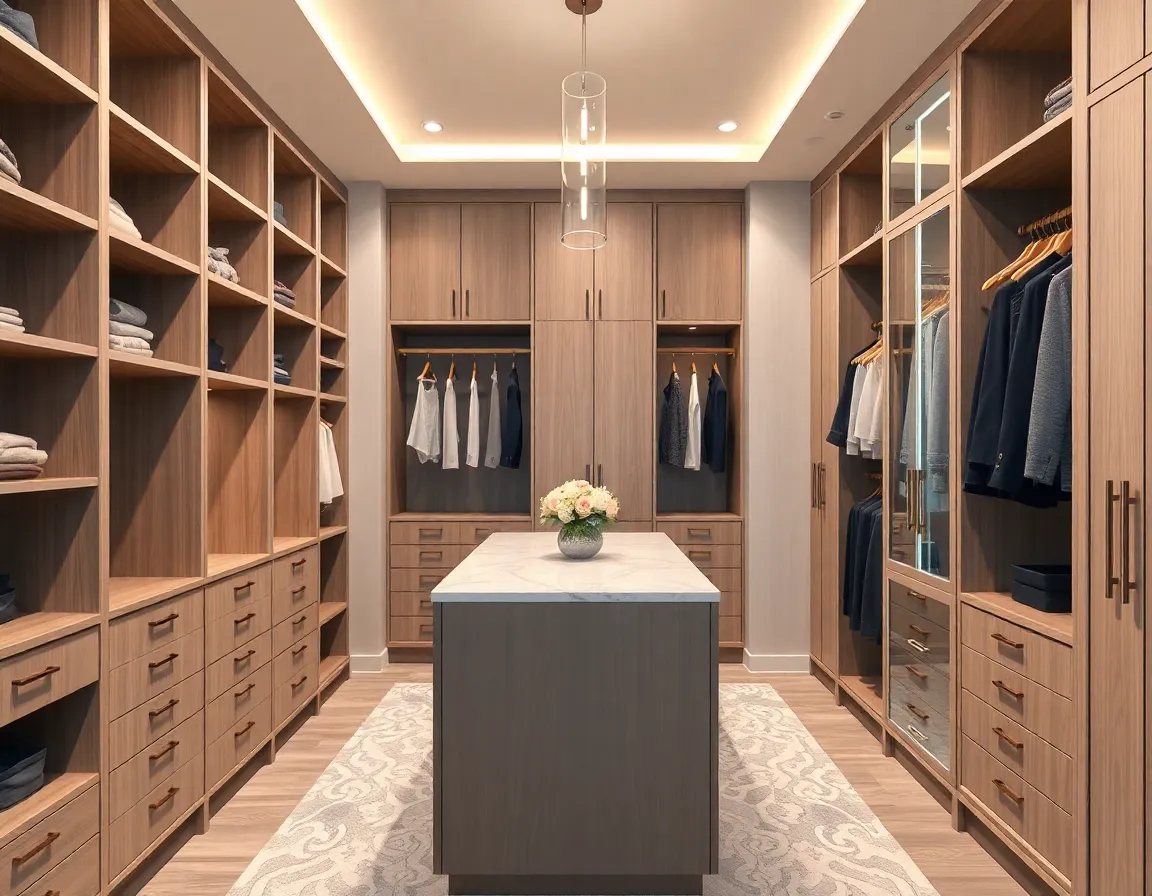
A well-designed walk-in closet is more than just a storage space—it’s a sanctuary that brings organization and luxury to your daily routine. Whether you’re renovating an existing closet or planning to build one from scratch, this comprehensive guide will walk you through everything you need to know to create the perfect walk-in closet tailored to your needs, style, and space constraints.
Why Invest in a Walk-In Closet?
Before diving into the design process, let’s understand why a walk-in closet is worth the investment:
- Maximized Storage: A thoughtfully designed walk-in closet can store significantly more items than a traditional closet while keeping everything accessible
- Increased Home Value: According to Remodeling Magazine, a well-designed walk-in closet can recoup 56-78% of its cost when selling your home
- Simplified Morning Routine: When everything has its place, getting dressed becomes effortless
- Reduced Clutter: Containing your wardrobe in a dedicated space keeps the rest of your bedroom serene and clutter-free
- Personal Retreat: A customized walk-in closet can serve as a private dressing area and personal style sanctuary
Assessing Your Space and Needs
Evaluating Available Space
The first step in designing your dream walk-in closet is to assess the available space. Walk-in closets can range from as small as 25 square feet (5’ x 5’) to luxurious rooms of 100+ square feet.
- Small walk-in closets (25-50 sq ft): Focus on vertical storage and minimalist organization
- Medium walk-in closets (50-100 sq ft): Allow for more customized storage solutions and possibly a small island or seating
- Large walk-in closets (100+ sq ft): Offer space for islands, vanities, seating areas, and display shelving
💡 Pro Tip: Not sure how to maximize your specific space? Try BrightShot to generate AI-powered closet layout options tailored to your exact room dimensions.
Understanding Your Wardrobe Needs
Before planning shelves and hanging rods, take inventory of your clothing and accessories:
- Count your hanging items (long vs. short)
- Measure folded items that require shelving
- Assess accessory storage needs (shoes, bags, jewelry, etc.)
- Consider seasonal storage requirements
The Spruce recommends doing a thorough wardrobe edit before designing your closet to ensure you’re only creating space for items you actually use and love.
Planning Your Layout: Key Components
Essential Walk-In Closet Elements
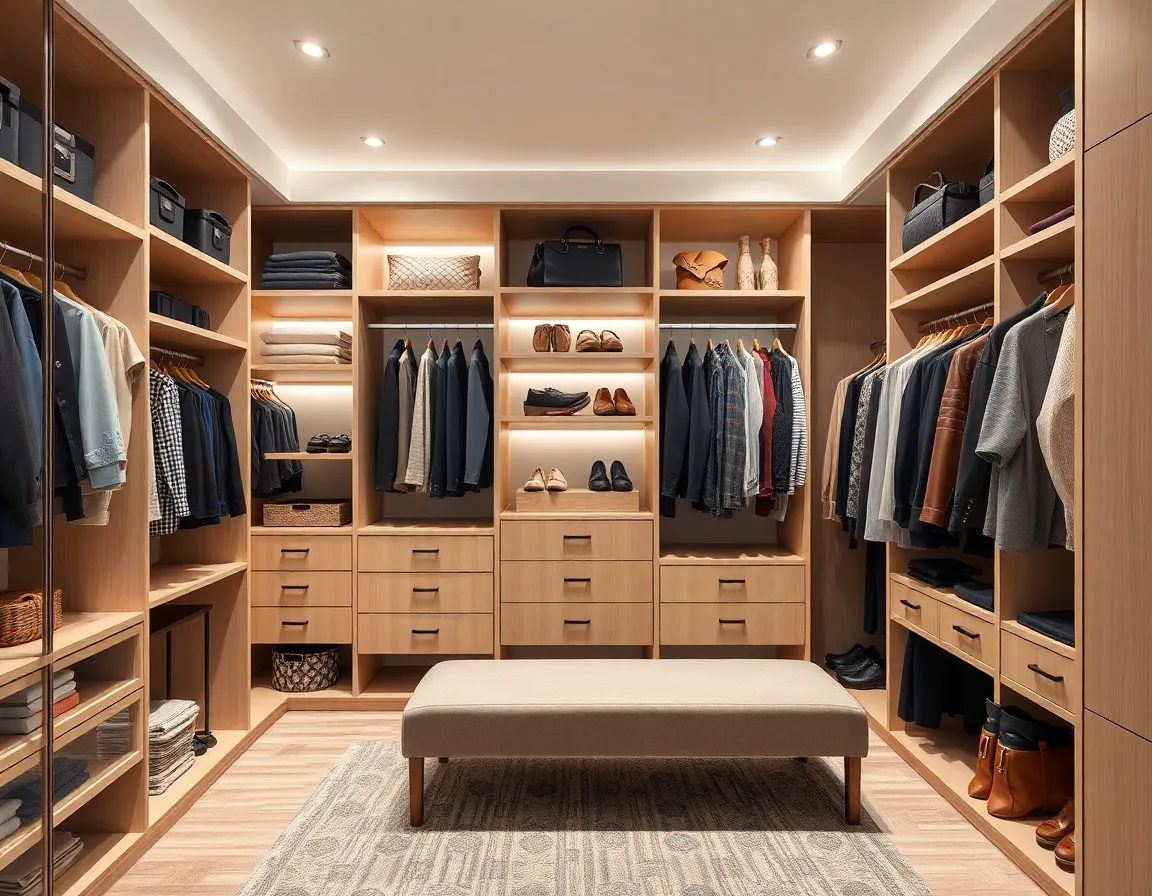
A well-designed walk-in closet typically includes these core components:
-
Hanging Areas
- Double-hang sections (two rods) for shirts, blouses, and folded pants
- Long-hang sections for dresses, coats, and long garments
- Allow 42” of rod length per 10 hanging garments
-
Shelving
- Adjustable shelves for folded clothes (sweaters, jeans, t-shirts)
- Specialized shelving for shoes, bags, and hats
- Display shelves for favorite accessories or collections
-
Drawers
- Shallow drawers for undergarments, socks, and accessories
- Medium drawers for folded clothes
- Deep drawers for bulky items like sweaters
-
Specialized Storage
- Pull-out racks for belts, ties, and scarves
- Jewelry organizers and watch winders
- Shoe shelves, cubbies, or racks
-
Additional Features
- Seating (bench, ottoman, or chair)
- Island or peninsula with storage
- Vanity area with lighting
- Full-length mirror
Optimizing Closet Dimensions
According to California Closets, these are the ideal dimensions for various closet elements:
- Main walkway width: Minimum 36” (preferably 42”-48”)
- Hanging rod height for double-hang: 42” and 84” from floor
- Hanging rod height for single-hang: 68” from floor
- Shelf depth: 12”-16” for clothes, 10”-12” for shoes
- Drawer depth: 14”-16” for most clothing items
- Toe kick height: 4” to allow standing close to cabinetry
Materials and Finishes
Comparing Closet System Options
When it comes to closet systems, you have several options ranging from budget-friendly to high-end custom solutions:
| System Type | Price Range | Pros | Cons |
|---|---|---|---|
| Wire Systems | $100-$500 | Affordable, easy to install, allows air circulation | Less sturdy, can leave marks on clothing, limited customization |
| Laminate/Melamine | $500-$3,000 | Good durability, many color options, moderate price | Can look less premium than wood, edges may peel over time |
| Wood Veneer | $1,500-$5,000 | Beautiful appearance, good durability, customizable | More expensive, requires maintenance |
| Solid Wood | $3,000-$10,000+ | Exceptional quality, ultimate durability, premium look | Most expensive option, requires professional installation |
| BrightShot Custom AI Design | $0 for initial design | Personalized designs based on your space, style quiz for preferences | Implementation requires purchasing materials or hiring contractors |
Recommended Closet System Brands
- 🔵 Budget-Friendly (under $50): IKEA’s PAX System offers affordable modular options with many accessories
- 🟡 Mid-Range ($50-200): The Container Store’s Elfa System provides great flexibility with semi-custom options
- 🟢 Premium ($200+): California Closets delivers fully custom, professionally installed solutions
💡 Pro Tip: Many home improvement stores like Home Depot offer free design consultations when you purchase their closet systems. Bring your measurements and wardrobe inventory for a personalized plan.
Lighting Your Walk-In Closet
Never underestimate the importance of proper lighting in your closet. Good lighting helps you distinguish colors accurately and find items easily.
Types of Closet Lighting to Consider
- 🎨 Ambient Lighting: Ceiling-mounted fixtures provide overall illumination
- 🎨 Task Lighting: Under-shelf lights or focused lights in specific areas
- 🎨 Accent Lighting: LED strips to highlight special features or displays
- 🎨 Natural Light: Windows or skylights if your closet has exterior walls
According to Houzz, the ideal solution combines ambient lighting with strategic task lighting to eliminate shadows. Consider adding a statement light fixture like a small chandelier or pendant light to add personality.
Organizing Your Walk-In Closet
Zoning Strategies
Organize your closet into functional zones based on:
- Frequency of use: Keep daily items at eye level
- Categories: Group similar items together (all shirts, all pants, etc.)
- Seasons: Rotate seasonal clothing to prime locations
- Outfits: For some, organizing by complete outfits works best
- Color: A visually appealing method that makes finding items easier
Smart Organization Products
-
🔵 Budget-Friendly (under $50):
- Amazon Basics Velvet Hangers ($20-30 for 50)
- IKEA SKUBB Organizers ($15)
-
🟡 Mid-Range ($50-200):
- The Container Store’s Clear Stackable Shoe Drawers ($75)
- Wayfair’s Tie and Belt Racks ($50-100)
-
🟢 Premium ($200+):
- Elfa Décor Drawer System ($200-500)
- Rev-A-Shelf Pull-Out Jewelry Drawer ($250-350)
Luxury Features Worth Considering
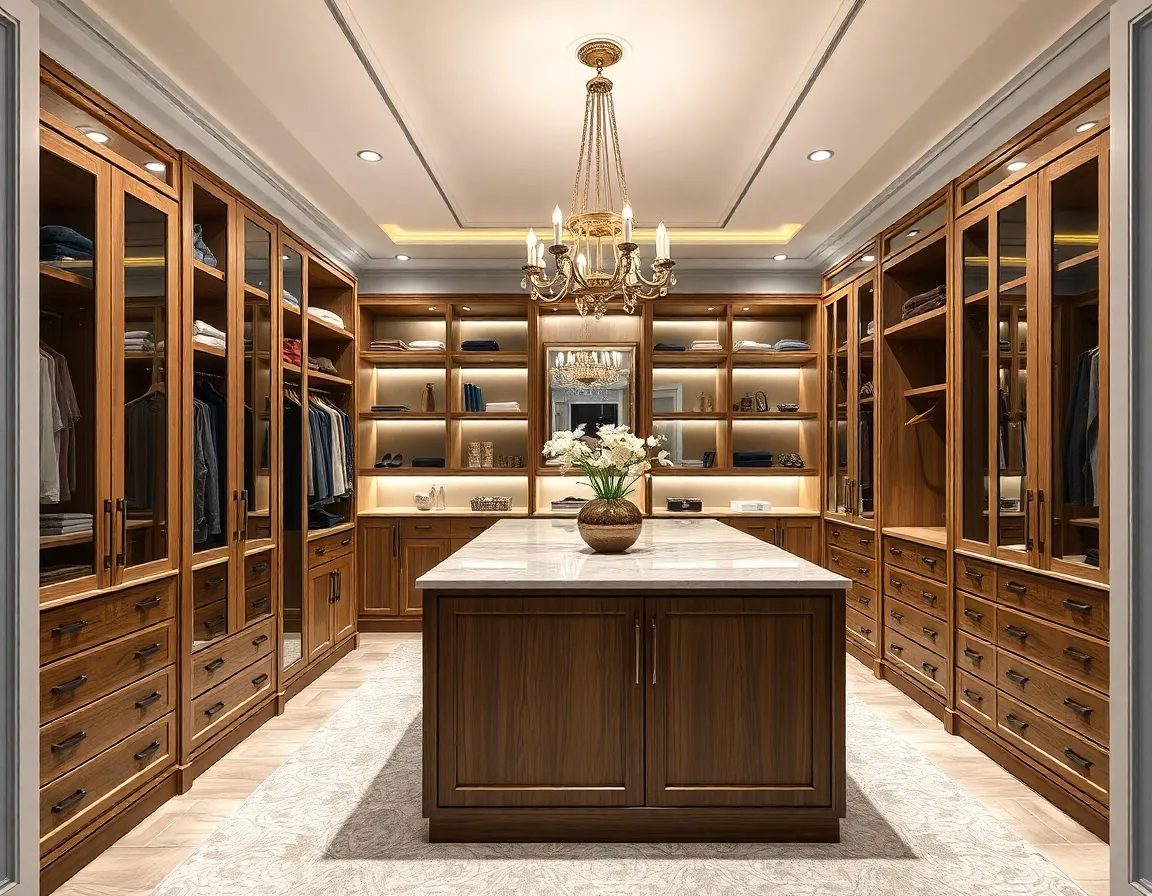
If budget allows, these luxury elements can elevate your walk-in closet experience:
High-End Additions
- Center Island: Provides additional storage and a surface for folding or packing
- Seating Area: A comfortable bench, chair, or ottoman
- Valet Rods: Pull-out rods for outfit planning or packing
- Hampers and Laundry Sorting: Built-in hampers for dirty clothes
- Safe or Secured Drawers: For valuable jewelry or accessories
- Smart Technology: Automated lighting, climate control, or inventory systems
- Beverage Station: Mini fridge or coffee bar for extended dressing sessions
💡 Pro Tip: When designing a luxury closet, consider how you get ready each day and incorporate elements that streamline your routine. For example, if you select outfits the night before, a designated staging area with a valet rod would be valuable.
DIY vs. Professional Installation
When to DIY
DIY closet installation can be appropriate if:
- You have basic carpentry skills
- Your design is relatively simple
- You’re working with pre-made components
- You’re on a tight budget
Family Handyman offers excellent tutorials for installing basic closet systems.
When to Hire Professionals
Consider professional installation when:
- Your design is complex with custom elements
- You want built-in cabinetry with premium finishes
- You lack the time or tools for proper installation
- You want a warranty on the installation
Professional installation typically adds 20-40% to your project cost but ensures precision and often includes a warranty.
Current Walk-In Closet Trends for 2023
Stay current with these popular walk-in closet trends:
- Open Concept Designs: Removing doors for a boutique-like experience
- Integrated Technology: Charging stations, smart mirrors, and inventory apps
- Mixed Materials: Combining wood, glass, and metal for visual interest
- Bold Colors: Moving beyond white to incorporate statement colors
- Sustainable Materials: Eco-friendly options like bamboo or recycled materials
- Multifunctional Spaces: Closets that double as home offices or reading nooks
- Statement Lighting: Decorative fixtures that add personality
According to Elle Decor, textured wallpaper and statement hardware are also trending in luxury closet design.
Budget Planning and Cost-Saving Tips
Walk-In Closet Cost Ranges
- Budget: $1,000-$3,000 (DIY with basic materials)
- Mid-Range: $3,000-$8,000 (Semi-custom with professional installation)
- Luxury: $8,000-$50,000+ (Fully custom with premium materials and features)
Money-Saving Strategies
- 💰 Phase your project, completing the most essential elements first
- 💰 Choose a hybrid approach with custom elements only where they matter most
- 💰 Shop floor samples and discontinued items for discounts
- 💰 Repurpose existing furniture like dressers or bookshelves
- 💰 Focus on high-impact areas and keep other areas simple
- 💰 Install yourself but hire professionals for complex measurements or cutting
💡 Pro Tip: Before investing in expensive custom solutions, try visualizing different options using BrightShot. Their AI design tool can help you see various layouts and finishes before committing to expensive materials or labor.
Maintenance and Longevity
Keep your walk-in closet looking and functioning beautifully with these maintenance tips:
- Dust shelves and vacuum floors weekly
- Clean mirrors and glass surfaces regularly
- Check and tighten hardware every few months
- Re-evaluate your organization system seasonally
- Apply wood polish to wooden components twice yearly
- Keep shoes clean before storing to prevent staining shelves
- Use cedar blocks or lavender sachets to deter moths
Conclusion: Bringing Your Dream Closet to Life
Designing your dream walk-in closet is a journey that balances practical storage needs with your personal style and budget. By carefully planning your layout, choosing appropriate materials, and incorporating elements that support your daily routine, you can create a space that brings joy and efficiency to your life.
Remember that the perfect walk-in closet is one that works for your specific needs—not just what looks good in magazines. Focus on functionality first, then add luxury and style elements that make the space uniquely yours.
If you’re feeling overwhelmed by the design process or want to visualize different options before committing, BrightShot offers an innovative AI-powered interior design tool that can help you explore various closet layouts, finishes, and organization systems tailored to your exact space. Their technology allows you to see realistic renderings of different design choices, helping you make confident decisions before investing in materials or construction.
Ready to transform your closet into the organized, beautiful space you’ve always wanted? Start by measuring your space, taking inventory of your wardrobe, and exploring the design ideas that resonate with you. Your dream walk-in closet awaits!