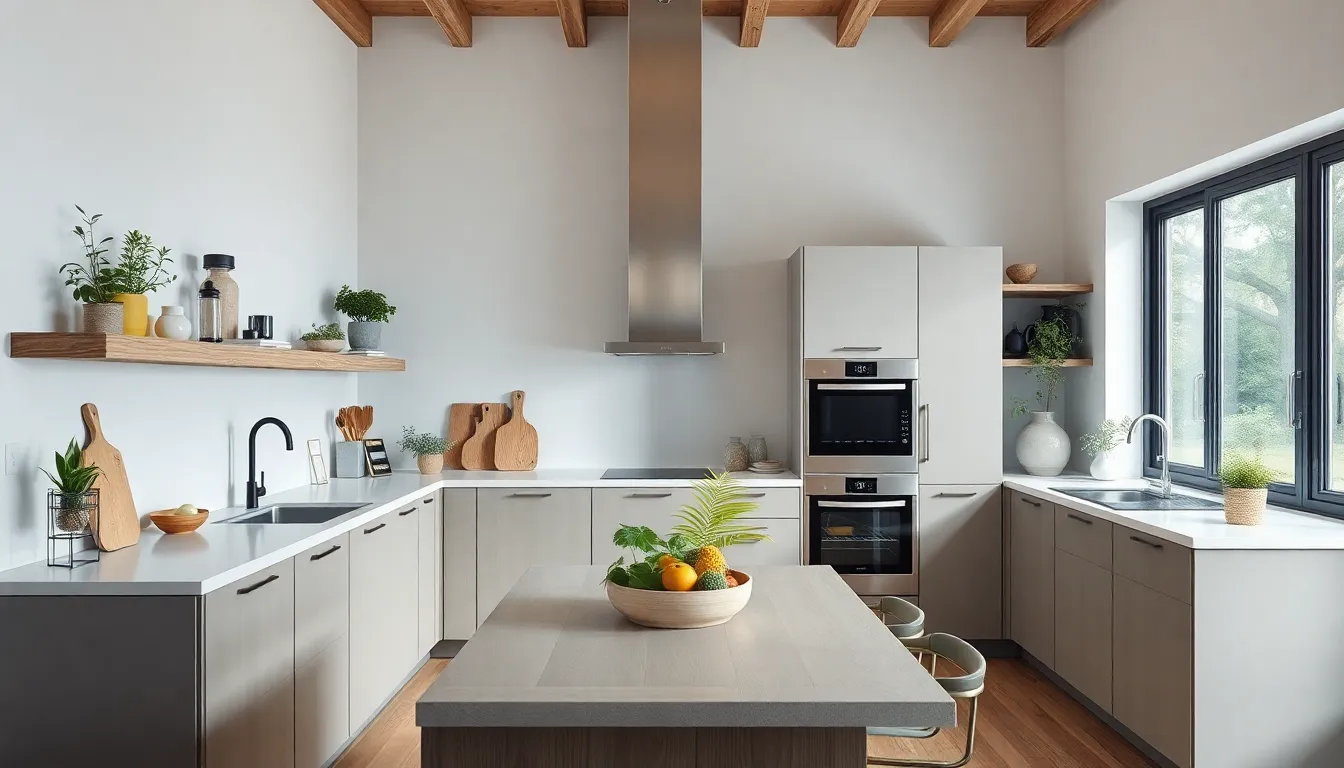
Scandinavian kitchen design continues to captivate homeowners worldwide with its perfect blend of functionality, beauty, and sustainability. This Nordic approach to kitchen design emphasizes clean lines, natural materials, and a minimalist aesthetic that creates spaces both practical and serene.
The appeal of Scandinavian kitchen design lies in its ability to transform cooking spaces into warm, inviting environments that prioritize both form and function. By embracing natural light, sustainable materials, and thoughtful organization, these kitchens create a sense of calm that extends throughout the entire home.
In 2025, Scandinavian kitchen design has evolved to incorporate modern technology and contemporary living needs while maintaining its core principles of simplicity, sustainability, and hygge. This comprehensive guide explores how to create your own Nordic-inspired kitchen that balances timeless design with modern functionality.
What Is Scandinavian Kitchen Design?
Scandinavian kitchen design originates from the Nordic countries of Denmark, Sweden, Norway, Finland, and Iceland, where long winters and limited daylight have shaped a design philosophy that maximizes light, warmth, and functionality. This design approach emerged in the mid-20th century as part of the broader Scandinavian design movement.
The fundamental principles of Scandinavian kitchen design center on simplicity, functionality, and connection to nature. These kitchens feature clean lines, uncluttered surfaces, and a neutral color palette dominated by whites, grays, and natural wood tones. The aesthetic prioritizes quality over quantity, choosing fewer, better-made pieces that serve multiple purposes.
Nordic kitchen design emphasizes the concept of “lagom,” a Swedish word meaning “just the right amount.” This philosophy guides every design decision, from cabinet hardware to lighting choices, ensuring that each element serves a purpose without excess or waste.
The style also incorporates “hygge,” the Danish concept of coziness and contentment, creating spaces that feel warm and welcoming despite their minimalist appearance. This balance between simplicity and comfort defines authentic Scandinavian kitchen design.
Why Scandinavian Kitchens Are So Popular in 2025
Scandinavian kitchen design has gained tremendous popularity in 2025 due to several converging trends that align perfectly with contemporary lifestyle needs. The growing emphasis on sustainability and eco-conscious living makes Nordic design principles particularly relevant for modern homeowners.
The rise of remote work and flexible living arrangements has increased demand for multifunctional spaces that can adapt to various needs throughout the day. Scandinavian kitchens excel at creating versatile environments that serve as cooking spaces, work areas, and social hubs without feeling cluttered or overwhelming.
Minimalism and decluttering movements have also contributed to the style’s popularity. As people seek to simplify their lives and reduce material possessions, Scandinavian design offers a framework for creating beautiful, functional spaces with fewer items.
The style’s emphasis on natural materials and biophilic design elements addresses the growing desire to connect with nature, especially important for urban dwellers who spend significant time indoors. Natural wood, stone, and plant elements create a sense of outdoor connection within interior spaces.
Additionally, Scandinavian design’s timeless appeal offers excellent long-term value. Unlike trend-driven styles that quickly become dated, Nordic kitchen design principles create spaces that remain relevant and beautiful for decades.
Core Elements of Scandinavian Kitchen Design
Natural Wood Accents
Natural wood serves as the foundation of Scandinavian kitchen design, bringing warmth, texture, and organic beauty to otherwise minimal spaces. Light woods like birch, pine, oak, and ash are particularly favored for their ability to reflect light and create airy, open feelings.
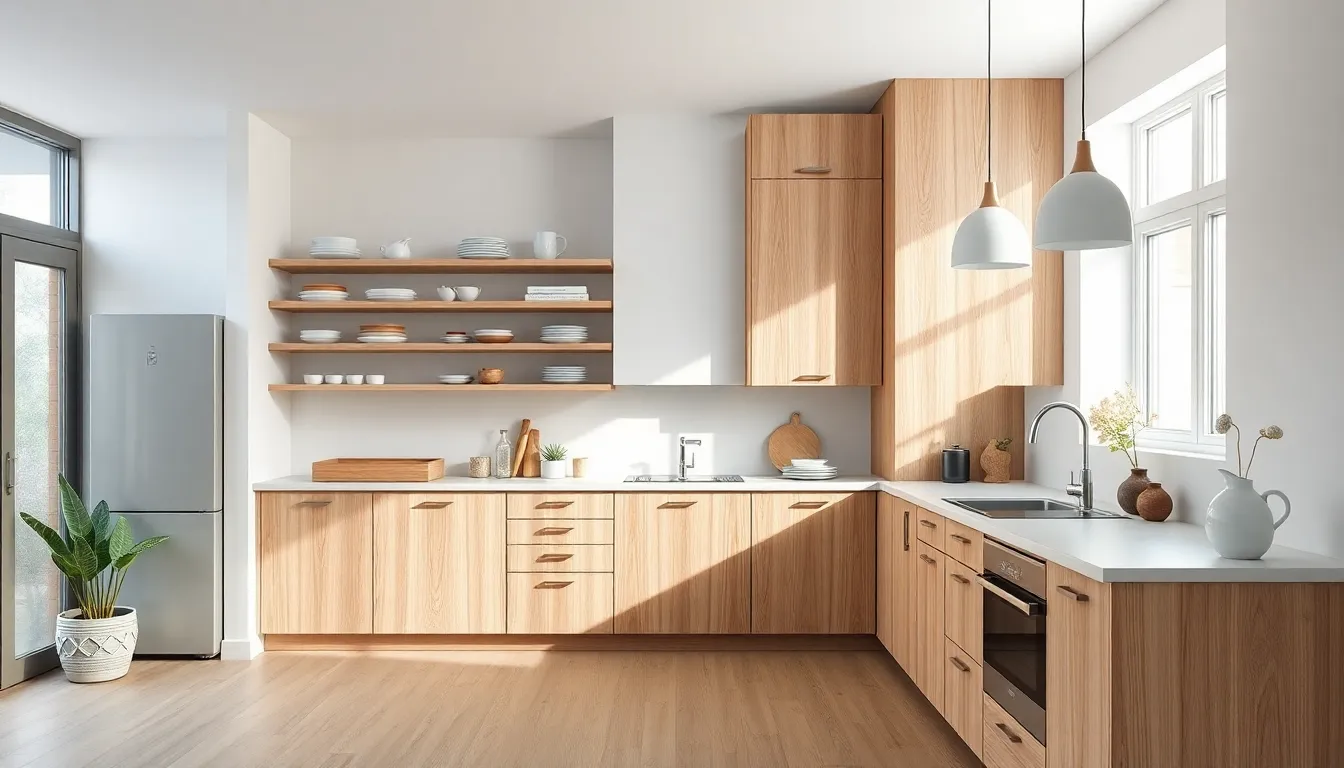
Wood appears throughout Scandinavian kitchens in various forms: cabinet faces, open shelving, countertops, flooring, and accent pieces. The key is using wood in its natural state, celebrating the grain patterns and organic variations that make each piece unique.
Sustainable sourcing is crucial when selecting wood for Scandinavian kitchens. Look for FSC-certified lumber, reclaimed wood, or locally sourced materials that align with Nordic environmental values. Proper finishing with natural oils or low-VOC sealers maintains the wood’s natural appearance while providing necessary protection.
The warmth of natural wood balances the coolness of white and gray elements, creating the perfect temperature contrast that defines Scandinavian design. This material choice also supports the biophilic design principles that connect interior spaces with the natural world.
Neutral Color Palette
The Scandinavian color palette draws inspiration from Nordic landscapes, featuring soft whites, warm grays, and muted earth tones that create serene, timeless environments. This neutral foundation allows natural materials and architectural elements to take center stage.
White serves as the primary color in most Scandinavian kitchens, but not stark, clinical white. Instead, choose warm whites with subtle undertones of cream, ivory, or gray that create depth and interest. These softer whites feel more inviting and work better with natural lighting conditions.
Gray tones range from light dove gray to deeper charcoal, providing contrast and sophistication without overwhelming the space. These colors work particularly well for lower cabinets, islands, or accent walls, creating visual weight and grounding the design.
Natural earth tones like soft beiges, mushroom grays, and sage greens can be incorporated sparingly as accent colors through textiles, ceramics, or small appliances. These colors should feel organic and muted rather than bold or saturated.
The key to successful Scandinavian color schemes is restraint and harmony. Each color should feel intentional and work together to create a cohesive, calming environment that supports the overall design philosophy.
Flat-Front & Handleless Cabinets
Flat-front cabinets epitomize Scandinavian design’s clean, minimalist aesthetic while providing the functional storage essential to Nordic living. These simple cabinet doors eliminate visual clutter and create smooth, uninterrupted surfaces that enhance the sense of space.
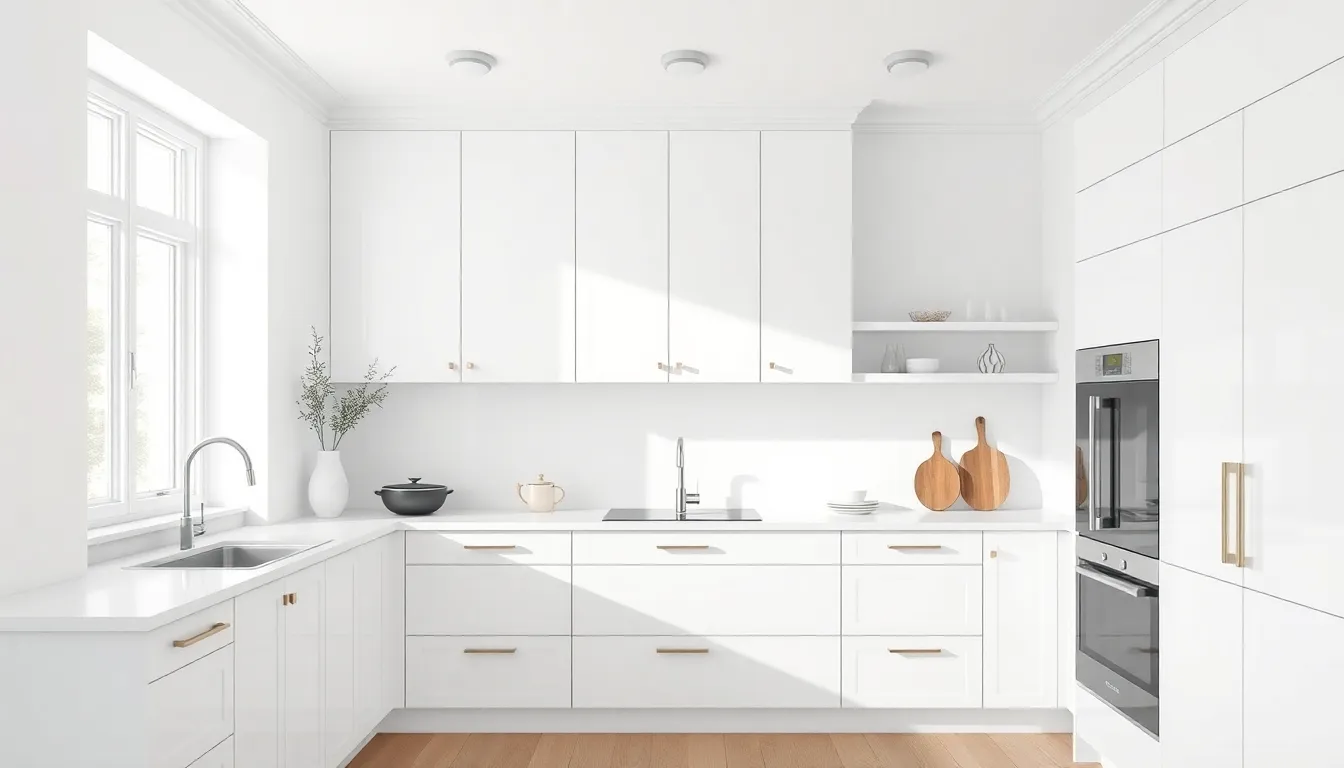
Handleless cabinetry takes minimalism even further, using push-to-open mechanisms, integrated finger pulls, or recessed handles that maintain clean lines. This approach creates seamless surfaces that feel modern and sophisticated while remaining highly functional.
When handles are used, they should be simple, geometric shapes in materials that complement the overall design. Thin metal bars, wooden pulls, or leather straps work well, but they should be understated and consistent throughout the kitchen.
The construction quality of flat-front cabinets is crucial since there are no decorative elements to hide imperfections. Invest in well-made cabinets with precise joinery, smooth finishes, and reliable hardware that will maintain their appearance over time.
Flat-front cabinets also offer excellent flexibility for future updates. The simple design allows for easy refinishing, hardware changes, or even complete door replacement without major renovation.
Sleek Appliances
Modern appliances in Scandinavian kitchens should blend seamlessly with the overall design while providing the functionality needed for contemporary cooking. Integrated appliances that hide behind cabinet panels maintain the clean, uncluttered aesthetic.
Stainless steel appliances work well in Scandinavian kitchens when they feature clean lines and minimal decorative elements. Choose models with simple controls, flat surfaces, and professional-quality construction that aligns with Nordic values of durability and performance.
White appliances have made a strong comeback in Scandinavian design, particularly when they feature modern styling and energy-efficient technology. These appliances blend with white cabinetry while providing the functionality needed for daily cooking.
Black appliances can create striking contrast in predominantly white kitchens, but they should be used sparingly and with careful consideration of the overall balance. Matte black finishes work better than glossy surfaces for maintaining the understated aesthetic.
Energy efficiency is crucial when selecting appliances for Scandinavian kitchens. Nordic countries lead the world in environmental consciousness, so choose ENERGY STAR certified appliances that minimize environmental impact while reducing operating costs.
Minimalist Decor
Scandinavian kitchen decor follows the “less is more” philosophy, carefully selecting a few meaningful pieces rather than filling surfaces with decorative objects. Each item should serve a purpose or bring genuine joy to the space.
Functional items become decorative elements in Scandinavian kitchens. Beautiful wooden cutting boards, ceramic bowls, copper pots, and glass storage containers serve dual purposes as both tools and display pieces.
Plants play an important role in Scandinavian decor, bringing life and natural color to neutral spaces. Herbs growing on windowsills, small potted plants on open shelves, or a single statement plant can transform the kitchen’s atmosphere.
Textiles add warmth and softness to hard surfaces. Simple linen dish towels, woven placemats, or a single area rug in natural materials provide comfort without visual clutter.
Artwork should be minimal and meaningful. A single piece of Nordic-inspired art, a collection of ceramic vessels, or family photographs in simple frames can personalize the space without overwhelming the clean aesthetic.
Emphasis on Natural Light
Natural light is perhaps the most important element in Scandinavian kitchen design, reflecting the Nordic appreciation for precious daylight during long winter months. Maximizing and celebrating natural light creates the bright, airy atmosphere that defines these spaces.
Window treatments should be minimal or eliminated entirely when privacy allows. Simple white curtains, natural linen panels, or no treatments at all ensure maximum light penetration while maintaining the clean aesthetic.
Reflective surfaces help amplify available natural light throughout the kitchen. White cabinets, light-colored countertops, and glossy tile backsplashes bounce light around the room, creating a brighter, more spacious feeling.
Mirrors can strategically increase natural light in kitchens with limited windows. A large mirror opposite a window or mirrored backsplash elements can double the apparent light while adding visual interest.
Skylight installation, when possible, dramatically increases natural light in Scandinavian kitchens. These architectural elements align perfectly with Nordic design principles while providing practical benefits for cooking and daily activities.
Designing a modern kitchen? Try BrightShot, the AI-powered planner that brings your Scandinavian kitchen vision to life in 3D.
Styling Ideas for Every Kitchen Type
Small Scandinavian Kitchens
Small kitchens benefit tremendously from Scandinavian design principles, as the style’s emphasis on light colors, clean lines, and efficient storage maximizes the sense of space while maintaining functionality.
Vertical storage solutions are essential in small Scandinavian kitchens. Floor-to-ceiling cabinets, open shelving that draws the eye upward, and wall-mounted storage systems make the most of available space while maintaining the clean aesthetic.
Light colors throughout small kitchens create the illusion of expanded space. White or very light gray cabinets, pale countertops, and minimal contrast between elements help walls visually recede and rooms feel larger.
Multifunctional furniture serves multiple purposes in compact spaces. A kitchen island that provides storage, workspace, and seating, or a dining table that doubles as prep space, aligns with Scandinavian efficiency principles.
Clever storage solutions hide clutter while maintaining accessibility. Pull-out drawers, corner lazy Susans, and integrated organizers keep small kitchens functional without sacrificing the minimalist appearance.
Open-Concept Scandinavian Kitchens
Open-concept layouts align perfectly with Scandinavian design philosophy, creating flowing spaces that emphasize connection, light, and functionality. These kitchens serve as the heart of the home while maintaining distinct zones for different activities.
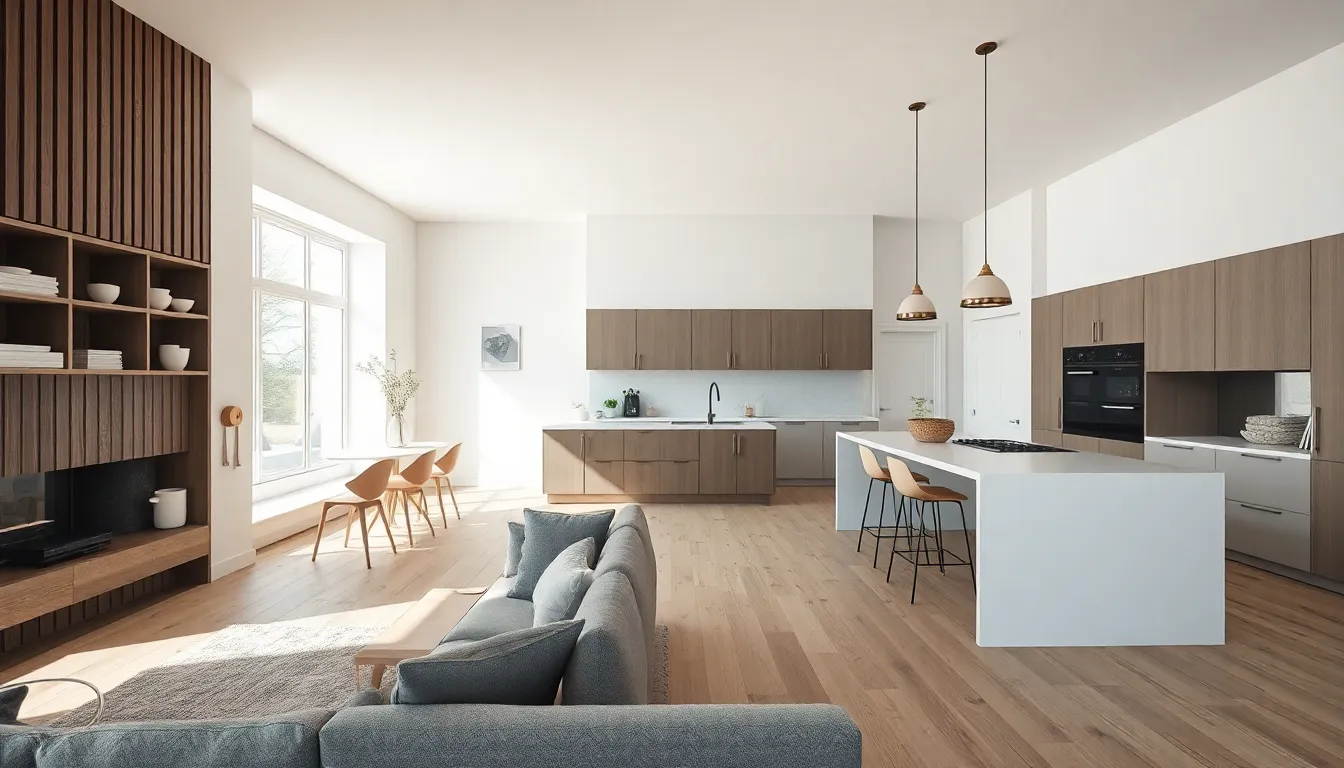
Consistent materials and colors throughout open spaces create visual continuity while defining separate areas. Using the same flooring, similar color palettes, and complementary furniture styles unifies the space without creating barriers.
Kitchen islands serve as natural transition elements between cooking and living areas. These central features provide workspace, storage, and casual seating while maintaining sight lines and conversation flow.
Lighting design becomes crucial in open-concept Scandinavian kitchens. Layered lighting with pendant lights over islands, under-cabinet task lighting, and ambient lighting in adjacent areas creates appropriate illumination for different activities.
Noise control considerations are important in open layouts. Choosing quieter appliances, soft-close cabinet hardware, and sound-absorbing materials helps maintain the peaceful atmosphere essential to Scandinavian design.
Apartment-Size Nordic Kitchens
Apartment kitchens often face space and structural limitations, but Scandinavian design principles can transform even the smallest cooking spaces into functional, beautiful environments that feel larger than their actual footprint.
Galley layouts work exceptionally well for apartment-size Scandinavian kitchens. The linear arrangement maximizes efficiency while the light color palette and minimal upper cabinets prevent the space from feeling cramped.
Space-saving appliances designed for smaller kitchens maintain functionality without overwhelming the space. Compact dishwashers, apartment-size refrigerators, and combination microwave-convection ovens provide necessary features in appropriately scaled packages.
Foldable and moveable elements add flexibility to small apartment kitchens. Drop-leaf tables, rolling carts, and fold-down prep surfaces can be deployed when needed and stored away to maintain open floor space.
Rental-friendly updates allow apartment dwellers to incorporate Scandinavian style without permanent modifications. Removable wallpaper, adhesive tiles, and temporary cabinet hardware can transform spaces while preserving security deposits.
Family-Friendly Scandinavian Layouts
Family-friendly Scandinavian kitchens balance the style’s minimalist aesthetic with the practical needs of households with children. These spaces prioritize safety, durability, and easy maintenance while maintaining Nordic design principles.
Durable materials that can withstand daily family use are essential. Quartz countertops, sealed wood surfaces, and high-quality cabinet finishes provide the longevity needed for busy family kitchens while maintaining their appearance over time.
Safety considerations include rounded counter edges, soft-close cabinet doors, and secure storage for dangerous items. These features protect children while maintaining the clean lines essential to Scandinavian design.
Easy-to-clean surfaces simplify maintenance in family kitchens. Non-porous countertops, washable cabinet finishes, and simple backsplashes make daily cleanup efficient and thorough.
Flexible seating arrangements accommodate family meals and homework time. Kitchen islands with seating, built-in banquettes, or expandable dining tables provide gathering spaces that adapt to different family activities.
The Hygge Kitchen Concept
Cozy Layout Ideas
Hygge, the Danish concept of cozy contentment, transforms Scandinavian kitchens from merely functional spaces into warm, inviting environments that encourage gathering and connection. Creating hygge requires thoughtful attention to comfort, atmosphere, and emotional well-being.
Intimate seating areas within or adjacent to the kitchen create cozy gathering spots. A small breakfast nook with built-in seating, a reading corner with a comfortable chair, or bar stools that encourage lingering conversation all contribute to the hygge atmosphere.
Warm materials balance the coolness of minimal design. Natural wood, soft textiles, and organic shapes add comfort without compromising the clean aesthetic. These elements should feel intentional and integrated rather than added as afterthoughts.
Personal touches make kitchens feel lived-in and loved. Family photographs, children’s artwork, or collections of meaningful objects create emotional connections while maintaining the overall design integrity.
Flexible lighting allows for different moods throughout the day. Bright task lighting for cooking, soft ambient lighting for evening meals, and candles for special occasions create the varied atmosphere essential to hygge.
Warm Lighting Tips
Lighting design plays a crucial role in creating hygge atmosphere in Scandinavian kitchens. The goal is to provide adequate illumination for tasks while creating warm, inviting ambiance that encourages relaxation and connection.
Layered lighting combines multiple sources to create depth and interest. Overhead lighting provides general illumination, under-cabinet lights offer task lighting, and accent lighting creates atmosphere. Each layer should be controllable independently for maximum flexibility.
Warm color temperatures (2700K-3000K) create the cozy feeling essential to hygge. Avoid cool, blue-toned lighting that can feel clinical or unwelcoming. LED bulbs now offer excellent warm light options with energy efficiency benefits.
Candles remain an important element in Scandinavian lighting design. Real candles provide the ultimate warm, flickering light that creates instant hygge atmosphere. Use them safely in appropriate holders and locations throughout the kitchen.
Dimmer switches allow for lighting adjustment throughout the day and for different activities. Installing dimmers on all lighting circuits provides maximum control over the kitchen’s atmosphere and energy usage.
Soft Furnishings & Rugs
Soft furnishings add essential warmth and comfort to Scandinavian kitchens while maintaining the style’s minimalist principles. These elements should be functional, beautiful, and made from natural materials that align with Nordic values.
Area rugs define spaces and add warmth underfoot. Choose rugs in natural materials like wool, jute, or cotton in neutral colors or simple patterns. The rug should be appropriately sized for the space and easy to clean for kitchen use.
Window treatments in natural fabrics soften hard architectural lines while providing privacy and light control. Linen curtains, Roman shades in natural materials, or simple valances add textile interest without overwhelming the space.
Cushions and throws on seating areas provide comfort and color opportunities. Choose fabrics in natural materials and muted colors that complement the overall palette. These items can be easily changed seasonally to refresh the space.
Table linens and kitchen textiles serve both functional and decorative purposes. Beautiful dish towels, placemats, and napkins in natural materials become part of the kitchen’s aesthetic while serving daily needs.
Breakfast Nooks & Gathering Spaces
Breakfast nooks and gathering spaces within Scandinavian kitchens create intimate areas for family meals, morning coffee, and casual conversation. These spaces embody the hygge principle of creating cozy environments that encourage connection.
Built-in seating maximizes space efficiency while creating cozy, intimate dining areas. Banquettes with storage underneath provide both seating and practical storage while maintaining clean lines and efficient use of space.
Natural materials in breakfast nooks reinforce the connection to nature essential in Scandinavian design. Wood tables, natural fiber cushions, and plants create organic, welcoming environments that feel separate from the working kitchen.
Flexible furniture allows breakfast nooks to serve multiple purposes. Tables that can expand for larger gatherings, seating that provides storage, or surfaces that can serve as workspace create versatile areas that adapt to family needs.
Personal touches make gathering spaces feel special and welcoming. Family photographs, children’s artwork, or seasonal decorations create emotional connections while maintaining the overall design aesthetic.
Eco-Friendly Scandinavian Kitchens
Reclaimed Materials
Sustainability is fundamental to Scandinavian design philosophy, making reclaimed materials an authentic and environmentally responsible choice for Nordic-inspired kitchens. These materials add character and history while reducing environmental impact.
Reclaimed wood brings unique character and environmental benefits to Scandinavian kitchens. Salvaged barn wood, old factory flooring, or reclaimed ship timber provides distinctive grain patterns and patina that new materials cannot replicate.
Vintage and antique elements add authenticity to Scandinavian kitchens while supporting sustainable consumption. Old farmhouse tables, vintage lighting fixtures, or antique storage pieces provide functional beauty with minimal environmental impact.
Salvaged architectural elements can be repurposed for unique kitchen features. Old doors become cabinet faces, vintage windows create room dividers, or reclaimed brick adds texture and character to backsplashes or accent walls.
Proper preparation and treatment of reclaimed materials ensures safety and longevity. Professional cleaning, pest treatment, and appropriate sealing protect both the materials and the home while preserving their authentic character.
Sustainable Wood & Bamboo
Sustainable wood choices align with Scandinavian environmental values while providing the natural beauty essential to Nordic design. Responsible sourcing and certification ensure that wood products support forest conservation and responsible management.
FSC-certified lumber guarantees that wood products come from responsibly managed forests that provide environmental, social, and economic benefits. This certification is particularly important for larger purchases like cabinetry and flooring.
Local wood species reduce transportation environmental impact while supporting regional economies. Using locally available woods also ensures that materials are appropriate for local climate conditions and building practices.
Bamboo offers an excellent sustainable alternative to traditional wood for certain applications. This rapidly renewable resource provides durability and beauty for countertops, flooring, and cabinet components while supporting environmental goals.
Proper finishing with low-VOC or natural products maintains indoor air quality while protecting wood surfaces. Natural oils, waxes, and water-based finishes provide protection without harmful chemical emissions.
Energy-Efficient Appliances
Energy-efficient appliances are essential components of sustainable Scandinavian kitchens, reducing environmental impact while providing the performance needed for modern cooking. Nordic countries lead the world in energy efficiency standards and environmental consciousness.
ENERGY STAR certification identifies appliances that meet strict energy efficiency guidelines set by the EPA. These appliances use 10-50% less energy than standard models while providing equal or superior performance.
Induction cooktops offer superior energy efficiency compared to gas or traditional electric ranges. These appliances heat cookware directly, reducing energy waste and providing precise temperature control that professional chefs prefer.
Convection ovens cook food more efficiently than conventional ovens by circulating hot air. This technology reduces cooking times and temperatures, saving energy while providing better cooking results.
Smart appliances optimize energy usage through advanced controls and connectivity features. These appliances can adjust operation based on usage patterns, energy costs, and grid demand to minimize environmental impact.
Waste-Reducing Storage Solutions
Efficient storage solutions in Scandinavian kitchens support waste reduction and sustainable living practices. Thoughtful organization systems make it easier to use ingredients efficiently, store leftovers properly, and maintain an organized, functional kitchen.
Pantry organization systems help prevent food waste by keeping ingredients visible and accessible. Clear containers, rotating shelves, and proper labeling ensure that items are used before expiration and reduce duplicate purchases.
Compost systems integrated into kitchen design make food waste recycling convenient and hygienic. Built-in compost bins, countertop containers, or outdoor compost access encourage sustainable waste management practices.
Bulk storage solutions reduce packaging waste while maintaining organization. Large containers for grains, legumes, and other staples eliminate single-use packaging while keeping ingredients fresh and accessible.
Recycling centers built into kitchen design make sustainable waste management convenient and attractive. Dedicated bins for different materials, hidden storage systems, and easy access encourage consistent recycling practices.
Scandinavian Kitchen Colors & Finishes
Scandinavian Blue
Scandinavian blue, inspired by Nordic skies and coastal waters, provides a sophisticated color accent that complements the neutral foundation of Nordic design. This color should be used sparingly and thoughtfully to maintain the style’s restraint.
Soft, muted blues work best in Scandinavian kitchens. Powder blue, gray-blue, or sage blue provide color interest without overwhelming the space. These colors work particularly well for lower cabinets, islands, or accent walls.
Blue and white combinations create classic Scandinavian color schemes reminiscent of traditional Nordic ceramics and textiles. This pairing feels fresh and timeless while maintaining the clean, uncluttered aesthetic.
Natural materials balance blue accents and prevent the color from feeling cold or clinical. Warm wood tones, natural stone, and organic textures provide necessary contrast and warmth.
Seasonal flexibility allows blue accents to be adjusted throughout the year. Lighter blues feel appropriate for spring and summer, while deeper, grayer blues work well for fall and winter decorating.
Warm Whites & Grays
Warm whites and grays form the foundation of Scandinavian color palettes, providing a neutral backdrop that allows natural materials and architectural elements to shine. These colors should feel soft and inviting rather than stark or clinical.
Off-white colors with subtle undertones create depth and interest while maintaining the bright, airy feeling essential to Scandinavian design. Cream, ivory, and warm white provide better color harmony than pure white.
Gray tones range from light dove gray to deeper charcoal, providing contrast and sophistication. These colors work particularly well for lower cabinets, creating visual weight and grounding the design.
Color temperature considerations ensure that whites and grays work harmoniously together. Cool grays pair with cooler whites, while warm grays complement cream and ivory tones.
Natural light affects how whites and grays appear throughout the day. Test color samples in different lighting conditions to ensure they maintain their intended appearance in your specific kitchen environment.
Light Woods
Light wood tones are fundamental to Scandinavian design, providing warmth, texture, and natural beauty that balances the coolness of white and gray elements. These woods should feel organic and authentic rather than processed or artificial.
Birch, pine, oak, and ash are traditional Scandinavian wood choices that provide the light, natural appearance essential to Nordic design. These woods age beautifully and develop character over time.
Natural finishes preserve the wood’s authentic appearance while providing necessary protection. Oil finishes, natural waxes, and low-sheen polyurethanes maintain the organic look while ensuring durability.
Grain patterns and natural variations should be celebrated rather than hidden. The organic irregularities in wood grain provide visual interest and authenticity that manufactured materials cannot replicate.
Sustainable sourcing ensures that wood choices align with Scandinavian environmental values. Look for FSC certification, local species, or reclaimed materials that support responsible forest management.
Subtle Tile Accents
Tile accents in Scandinavian kitchens should complement rather than compete with the overall design. Subtle patterns, natural materials, and restrained color choices maintain the style’s minimalist aesthetic while adding necessary function.
Subway tiles remain a classic choice for Scandinavian backsplashes. White or light gray subway tiles provide timeless appeal and easy maintenance while supporting the clean, uncluttered aesthetic.
Natural stone tiles add organic texture and subtle color variation. Marble, limestone, or slate tiles provide sophisticated backgrounds that complement both white cabinets and natural wood elements.
Geometric patterns should be simple and understated. Small hexagons, linear arrangements, or subtle herringbone patterns add visual interest without overwhelming the space.
Grout color affects the overall appearance of tile installations. White or light gray grout maintains clean lines, while darker grout can emphasize pattern and add contrast.
Best Scandinavian Kitchen Layouts
Galley Nordic Kitchens
Galley layouts work exceptionally well for Scandinavian kitchen design, creating efficient work triangles while maintaining the clean lines and uncluttered appearance essential to Nordic style. These linear arrangements maximize functionality in narrow spaces.
Parallel counters in galley kitchens should maintain adequate clearance for comfortable movement. A minimum of 42 inches between counters allows for easy passage and cabinet access while maintaining efficiency.
Upper cabinet placement requires careful consideration in galley layouts. Limiting upper cabinets to one side or using open shelving prevents the space from feeling cramped while maintaining necessary storage.
Lighting design is crucial in galley kitchens to prevent shadows and dark areas. Under-cabinet lighting, pendant lights, and adequate general lighting ensure even illumination throughout the workspace.
End-wall treatments can enhance galley kitchens by adding visual interest and preventing tunnel-like feelings. Windows, artwork, or open shelving at the end of the galley create focal points and improve the space’s proportions.
L-Shaped Layouts
L-shaped layouts provide excellent flexibility for Scandinavian kitchen design, offering efficient work triangles while creating opportunities for islands, dining areas, or open connections to adjacent rooms.
Corner utilization is important in L-shaped kitchens to maximize storage and maintain accessibility. Lazy Susans, pull-out drawers, or diagonal cabinets make corner spaces functional and organized.
Work triangle efficiency should guide appliance placement in L-shaped layouts. Positioning the sink, stove, and refrigerator at appropriate distances creates smooth workflow while maintaining the open feeling.
Island additions can enhance L-shaped kitchens by providing additional workspace, storage, and seating. The island should be proportional to the space and maintain adequate clearance for movement.
Open connections to adjacent rooms take advantage of L-shaped layouts’ natural flow. Removing walls or creating pass-throughs enhances the sense of space while maintaining distinct functional zones.
Single-Wall + Island Combos
Single-wall kitchens with islands provide excellent solutions for open-concept homes and smaller spaces while maintaining Scandinavian design principles. This layout maximizes floor space while providing necessary functionality.
Island proportions should balance workspace needs with movement requirements. The island should provide adequate prep space and storage without overwhelming the room or impeding traffic flow.
Appliance distribution between the wall and island creates efficient work zones. Placing the sink or cooktop in the island while keeping refrigeration and storage on the wall creates logical workflow patterns.
Seating integration on islands provides casual dining and social interaction opportunities. Bar-height or counter-height seating should be comfortable and proportional to the island size.
Storage maximization is crucial in single-wall layouts since cabinet space is limited. Tall cabinets, efficient organization systems, and island storage help compensate for the reduced perimeter storage.
Peninsula Scandinavian Kitchens
Peninsula layouts offer many benefits of kitchen islands while requiring less floor space, making them excellent choices for Scandinavian kitchens in smaller homes or apartments.
Connection points between peninsulas and existing cabinetry should maintain clean lines and consistent styling. Seamless integration creates unified appearance while providing the functional benefits of additional workspace.
Seating arrangements on peninsulas create casual dining opportunities without requiring separate dining furniture. This efficiency aligns with Scandinavian principles of multifunctional design.
Storage opportunities in peninsulas include both base cabinets and potential upper storage. However, upper cabinets should be used sparingly to maintain the open feeling essential to Scandinavian design.
Traffic flow around peninsulas requires careful planning to ensure adequate clearance and smooth movement patterns. The peninsula should enhance rather than impede the kitchen’s functionality.
Common Mistakes to Avoid
Overdecorating
Overdecorating is perhaps the most common mistake in Scandinavian kitchen design, as the style’s beauty lies in restraint and simplicity. Every decorative element should serve a purpose or bring genuine joy to the space.
Clutter accumulation contradicts Scandinavian principles and makes spaces feel chaotic rather than calm. Regular decluttering and thoughtful purchasing decisions help maintain the clean, organized appearance.
Too many decorative objects compete for attention and overwhelm the subtle beauty of natural materials and clean lines. Choose fewer, higher-quality pieces that complement rather than compete with the overall design.
Seasonal decorating should be minimal and thoughtful. Simple changes like switching textiles or adding seasonal plants maintain interest without compromising the timeless aesthetic.
Personalization should feel integrated rather than added as an afterthought. Family photographs, meaningful objects, and personal collections should enhance rather than distract from the overall design.
Lack of Functional Storage
Inadequate storage planning undermines both the functionality and aesthetic of Scandinavian kitchens. Efficient storage systems are essential for maintaining the clean, uncluttered appearance that defines the style.
Hidden storage solutions keep necessary items accessible while maintaining visual simplicity. Pull-out drawers, interior organizers, and clever cabinet systems maximize storage efficiency.
Vertical space utilization is crucial in Scandinavian kitchens where upper cabinets may be limited. Tall pantry cabinets, ceiling-height storage, and wall-mounted systems make the most of available space.
Specialized storage for different items ensures everything has a designated place. Spice storage, dish organization, and appliance storage should be planned during the design phase.
Accessibility considerations ensure that storage systems work for all family members. Appropriate heights, easy-to-reach locations, and user-friendly hardware make storage both functional and convenient.
Ignoring Lighting Balance
Poor lighting design can undermine even the most carefully planned Scandinavian kitchen. Balanced lighting that provides both function and atmosphere is essential for creating the bright, welcoming environment that defines Nordic design.
Insufficient task lighting makes cooking and food preparation difficult and potentially dangerous. Under-cabinet lights, pendant lights over islands, and adequate general lighting ensure safe, efficient work areas.
Overly bright lighting can feel harsh and clinical, contradicting the warm, inviting atmosphere essential to hygge. Dimmer controls and multiple light sources allow for appropriate lighting levels throughout the day.
Cold color temperatures create unwelcoming environments that feel institutional rather than homey. Warm light sources (2700K-3000K) provide the cozy atmosphere essential to Scandinavian design.
Natural light maximization should be prioritized in all Scandinavian kitchens. Window treatments, reflective surfaces, and strategic mirror placement help amplify available daylight.
Using Too Much Color
Excessive color use can overwhelm the subtle beauty of Scandinavian design and create visual chaos rather than the calm, serene environment that defines Nordic style.
Bright, saturated colors feel out of place in Scandinavian kitchens and can quickly date the design. Muted, natural colors that complement rather than compete with neutral foundations work better.
Too many accent colors create visual confusion and undermine the cohesive appearance essential to Scandinavian design. Limit accent colors to one or two carefully chosen hues.
Color trends should be incorporated through easily changeable elements rather than permanent fixtures. Textiles, accessories, and small appliances allow for color updates without major renovation.
Natural color variations in materials provide sufficient visual interest without additional color. Wood grain, stone patterns, and textile textures create depth and interest within neutral palettes.
Conclusion
Scandinavian kitchen design offers a timeless approach to creating beautiful, functional cooking spaces that prioritize simplicity, sustainability, and comfort. By embracing natural materials, neutral colors, and thoughtful organization, these kitchens create environments that support both daily cooking needs and family gathering.
The enduring appeal of Scandinavian design lies in its ability to balance minimalism with warmth, creating spaces that feel both sophisticated and welcoming. This balance makes Nordic-inspired kitchens suitable for various home styles and family needs while maintaining their distinctive character.
As we move through 2025, Scandinavian kitchen design continues to evolve while maintaining its core principles. The integration of sustainable materials, energy-efficient appliances, and smart technology enhances functionality while supporting environmental values that are fundamental to Nordic culture.
The hygge concept adds essential warmth and personality to Scandinavian kitchens, ensuring that these spaces serve as true hearts of the home where families gather, cook together, and create lasting memories. This emotional connection transforms functional spaces into meaningful environments.
Whether you’re planning a complete kitchen renovation or making smaller updates, Scandinavian design principles can guide you toward creating a space that is both beautiful and functional. The style’s emphasis on quality over quantity, natural materials, and thoughtful design ensures that your investment will provide lasting value and enjoyment.
Whether you’re renovating or starting fresh, BrightShot helps you design the perfect Scandinavian kitchen—instantly and beautifully.
Frequently Asked Questions
What makes a kitchen Scandinavian?
Scandinavian kitchens are characterized by clean lines, natural wood, neutral colors, and functional, minimalist layouts that emphasize light and simplicity. They prioritize quality materials, efficient storage, and create warm, welcoming environments despite their minimal aesthetic.
What is the difference between Danish and Swedish kitchen design?
Danish kitchens focus on sleek, modern functionality with warm tones and emphasize the hygge concept of cozy comfort. Swedish kitchens lean into tradition with farmhouse touches and bright white palettes, often incorporating more rustic elements and traditional craftsmanship.
How can I make my kitchen look Scandinavian?
Use natural materials like wood, stick to a light neutral palette, incorporate flat-panel cabinets, minimize clutter, and emphasize natural and layered lighting. Focus on functionality, choose quality over quantity, and add warmth through textiles and plants while maintaining clean lines.
Is Scandinavian kitchen design sustainable?
Yes, sustainability is a core value in Scandinavian design. These kitchens often use eco-friendly materials, energy-efficient appliances, and timeless designs that last for decades. The emphasis on quality, natural materials, and minimal waste aligns with environmental consciousness.
Pinterest Caption: Create a calm and cozy kitchen with Scandinavian design principles—natural wood, soft lighting, and minimalist magic for 2025. 🌿✨ Nordic simplicity meets modern function! #scandinaviankitchen #nordicdesign #minimalistkitchen #hygge #kitchendesign