If you’re a real estate agent working anywhere in northern or central New Jersey, the Garden State Multiple Listing Service (GSMLS) is almost certainly the primary database your business runs on. It’s where listings go live, where co-broke offers get advertised, and where the buyer’s agent on the other side of every transaction is doing their research. Knowing how it works — and how it differs from the other MLS systems New Jersey agents end up navigating — is one of the highest-leverage things a new agent in this market can master.
This guide answers the questions agents (and serious buyers) ask about GSMLS in 2026: what it actually is, which counties it covers, who can access it, what the photo and data-quality standards look like, how it stacks up against NJMLS and the other New Jersey MLSes, and the listing-day workflow that the agents shipping the most volume in this state have settled on.
What is GSMLS?
Garden State Multiple Listing Service is a member-owned, broker-owned multiple listing service headquartered in Roseland, NJ. It’s one of the largest MLSes in the Northeast and the dominant one across northern and north-central New Jersey. GSMLS pools listing data from thousands of New Jersey real estate brokerages so that any participating agent — listing side or buyer side — can search, share, and co-broke against the same authoritative dataset.
The shorthand is simple: in northern New Jersey, GSMLS is where the listings live. If a property is listed by a member brokerage and active for sale, it’s on GSMLS within hours.
Unlike national portals like Zillow and Realtor.com, which mirror MLS feeds with a lag and a fair amount of stale data, GSMLS is the upstream source of truth. New listings, price changes, status changes (Active → Under Contract → Closed), and broker-only notes all hit GSMLS first, then flow downstream to consumer sites later.
Which counties does GSMLS cover?
GSMLS’s traditional coverage is the six northern and central New Jersey counties where it has the deepest listing density:
- Morris
- Sussex
- Warren
- Passaic
- Union
- Hunterdon
In practice, GSMLS data extends well beyond that footprint. Member brokerages in Essex, Somerset, Middlesex, Bergen, and Hudson counties also post listings to GSMLS in large volume, often dual-listing them in NJMLS or another regional MLS for maximum buyer exposure. If you’re agenting in any northern or central NJ county and your brokerage participates, GSMLS is on your daily tab list.
For the southern half of the state — Atlantic, Cape May, Cumberland, Salem — coverage thins out and other MLSes take over (notably Trend MLS / Bright MLS, the Mid-Atlantic super-regional system that absorbed several southern NJ MLSes in 2017).
Who can access GSMLS?
GSMLS is a closed, members-only system. You don’t sign up casually. To log in to GSMLS, you need to be:
- A licensed New Jersey real estate salesperson or broker (active license in good standing with the NJ Real Estate Commission)
- Affiliated with a GSMLS member brokerage (your broker has to be a paying participant in the MLS)
- A REALTOR® member — meaning your brokerage holds membership in one of the local NJ Boards of REALTORS® that participates in GSMLS, like the North Central Jersey Association of REALTORS® (NCJAR), Greater Bergen REALTORS, or one of several others
Once those three boxes are checked, your broker (or the broker’s office admin) requests an MLS account on your behalf, and you receive credentials within a few business days.
Cost-wise, GSMLS access in 2026 typically runs $30–$50 per agent per month in MLS-only fees, on top of NAR/state/local board dues and your brokerage split. The exact number depends on your local board and any technology bundles (Supra eKey for lockboxes, Matrix vs. Paragon front-end, etc.).
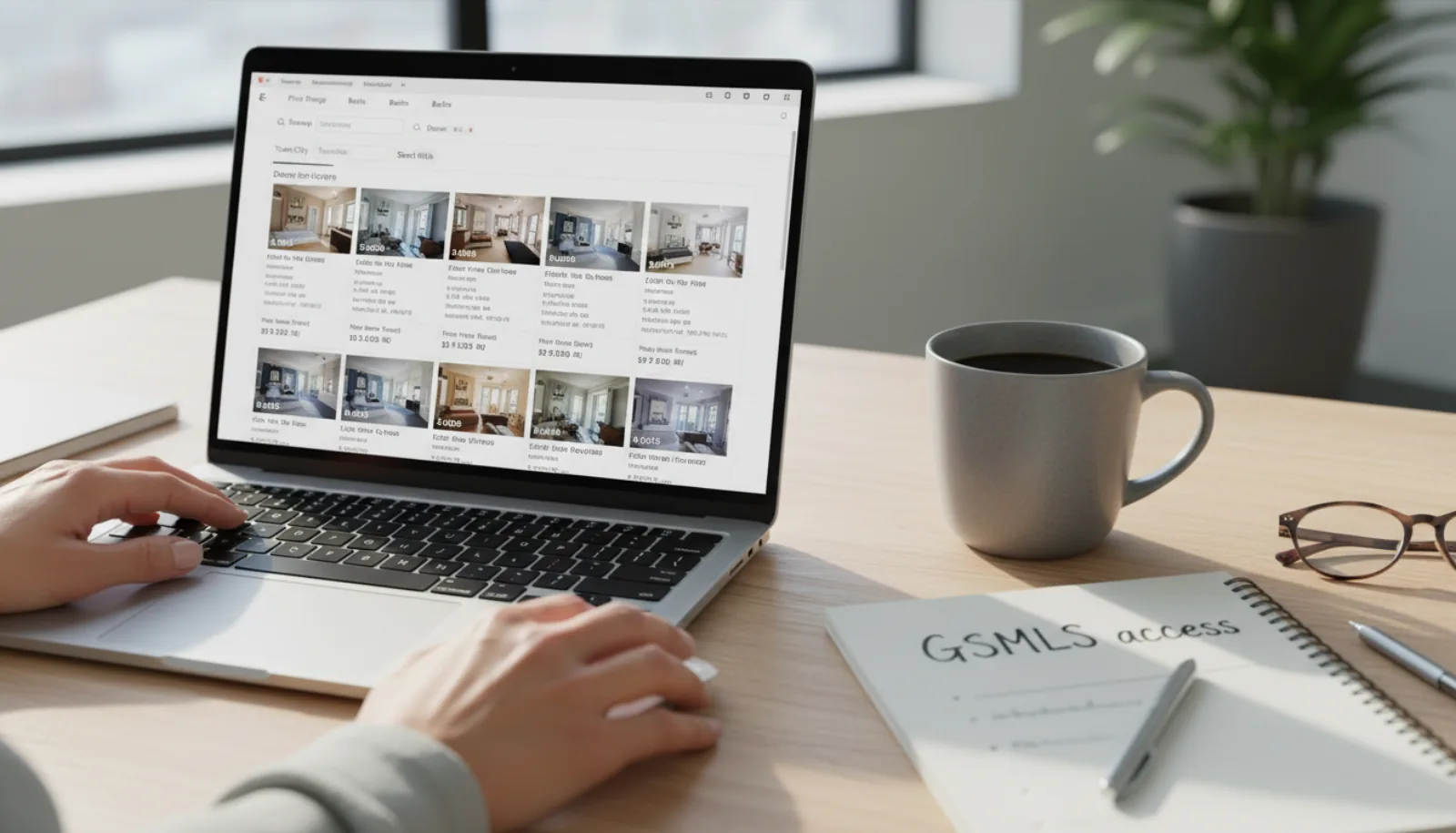
The public can search the data — GSMLS exposes a consumer-facing search at gsmls.com that lets non-members browse active listings for sale and rent. But the full broker view (showing instructions, commission splits, broker-only notes, comp history, off-market data) is gated behind the member login.
How GSMLS compares to NJMLS and the other New Jersey MLSes
New Jersey has roughly eight active MLSes — more than any state of its size — and agents working between counties usually end up paying for two or three to cover their territory. The big three:
| MLS | Primary coverage | Owned by | Notable strengths |
|---|---|---|---|
| GSMLS (Garden State MLS) | Morris, Sussex, Warren, Passaic, Union, Hunterdon — plus heavy Essex/Somerset/Middlesex overlap | Member brokers | Largest northern NJ footprint, strong photo guidelines, well-developed Matrix UI |
| NJMLS (New Jersey MLS) | Bergen, Hudson, Passaic — northern Bergen-anchored | Member brokers | Tighter Bergen coverage, strong agent tools (Matrix), separate fee schedule |
| Bright MLS (formerly Trend MLS for southern NJ) | Southern NJ counties + Mid-Atlantic (PA, MD, VA, DC, DE) | Bright MLS, Inc. | Largest MLS in the US by listing count, dominant in Philadelphia and Mid-Atlantic |
There are also smaller regional MLSes (Monmouth-Ocean MLS, South Jersey Shore Regional MLS, Central Jersey MLS, etc.) that matter intensely if you work those markets but are otherwise rounding error.
Practical agent reality: most northern NJ listing agents pay for GSMLS + NJMLS at a minimum, and dual-list any property within reach of both systems’ coverage. The added monthly cost is a rounding error against the buyer-side reach. Southern NJ agents pay for Bright MLS instead of GSMLS.
If you’re new to the state and trying to pick: if your brokerage works north of I-78 and west of the Hudson, GSMLS is the one you need first.
Listing standards and photo requirements on GSMLS
GSMLS has published photo and data-quality standards that the average agent learns the hard way after their first rejected listing. The rules that matter most:
Photo requirements (as of 2026):
- Minimum count: at least 1 exterior photo per active listing. There’s no enforced minimum beyond that, but listings with fewer than 8 photos get materially worse engagement on consumer portals downstream. 25-35 is the working norm.
- Maximum count: typically 36 photos per listing (Matrix limit)
- Image specs: JPG, minimum 1024px wide; the Matrix back-end handles resizing, but uploading already-sized images at exactly 1024px wide is faster
- No watermarks of brokerages or agents on the photos themselves (logos are added by the platform separately)
- No third-party logos, sold signs, or text overlays in listing photos
- Photos must be of the actual property — stock photos and renderings get flagged
Data quality:
- All required fields must be completed accurately (taxes, lot size, year built, etc.)
- Showing instructions must be filled in or showings won’t load in ShowingTime
- Status changes (Active → UC → Closed) must be entered within 2 business days of the trigger event or your brokerage starts getting fined per MLS rules
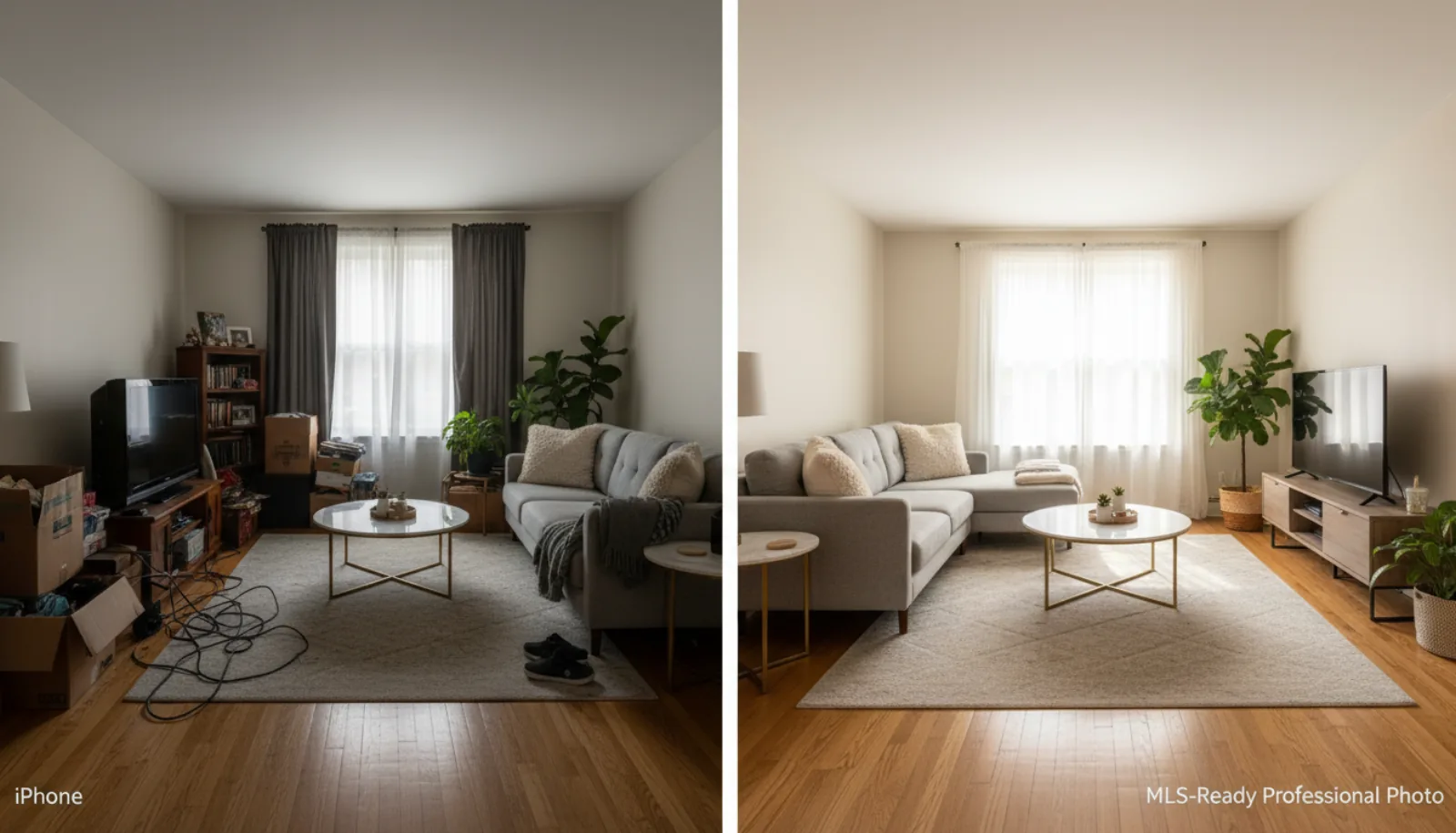
The photo standards in particular matter more than most agents realize. Listings with bright, well-composed photos average 40-60% more saves and click-throughs on Zillow (which pulls from GSMLS data) than listings with dim or cluttered photography. The difference between a listing that books 12 showings the first weekend and one that sits at 2 is almost always upstream of price — it’s the photos.
For a working tutorial on the GSMLS interface itself — how to enter a listing, manage photos, run searches — David Blinder’s getting-started walkthrough for new New Jersey REALTORS is the cleanest free version on YouTube:
The listing-day workflow on GSMLS
Here’s the workflow the highest-volume listing agents in northern NJ have settled into in 2026 — measured by time from accepted contract to live GSMLS listing:
Day 0 (contract accepted)
- Confirm photos approach with seller (DIY iPhone + AI editing, or hire a photographer)
- Block 1 hour Saturday morning for the shoot
Day 1 (Saturday morning)
- Shoot the property on iPhone (wide-angle lens, tripod, all interior + exterior). 30-45 minutes on-site.
- Upload to BrightShot for AI lighting fixes, decluttering, and virtual staging where rooms are vacant. ~10 minutes for 25 photos.
- Generate the listing description with a few property details. ~30 seconds.
Day 1 (Saturday afternoon)
- Log into GSMLS Matrix
- Create the listing, paste fields from your CMA
- Upload 25-30 enhanced photos
- Paste the AI-generated description, edit for voice
- Click Save & Submit. Status: Active.
Day 2 (Sunday)
- Listing appears on Zillow, Realtor.com, Redfin
- First weekend showings begin Monday/Tuesday
The agents we hear from regularly say this workflow takes them 1 day from accepted contract to live listing on GSMLS — versus the 5-7 days of the old “hire a photographer, wait for delivery, hire a virtual stager, wait for delivery, then write the description” workflow.
🏠 Cut your GSMLS listing prep from days to one afternoon. BrightShot turns the photos you already shot on your iPhone into MLS-ready listing photography — AI lighting, decluttering, virtual staging, and listing descriptions in one workflow. Try the free plan →
How GSMLS data flows to Zillow, Realtor.com, and other portals
A common misconception: a listing on Zillow is the listing. It isn’t. The flow looks like this:
- Agent enters listing in GSMLS (the source)
- GSMLS pushes IDX feeds to subscribing portals — Zillow, Realtor.com, Redfin, Homes.com, plus broker websites that license IDX
- Each portal ingests on their own schedule (typically every 15 minutes to 4 hours)
- Status changes propagate the same way
This is why a Zillow price-change can show up an hour or two after the GSMLS change — and why the data buyers see on Zillow is sometimes stale by a few hours during fast-moving markets.
For listing agents this matters in two ways:
- Always check GSMLS as the source of truth when a buyer’s agent calls about a listing. Zillow may show “Active” while GSMLS already shows “Under Contract.”
- Photos on Zillow come from GSMLS — if your photos look bad on Zillow, they came from your GSMLS upload. The fix is upstream.
GSMLS member benefits beyond listings
GSMLS membership unlocks more than just the listing database. The included or member-discounted tools that working agents actually use:
- ShowingTime for booking and managing showings (deeply integrated)
- Supra eKey for lockbox access — the iPhone-app version is the standard now, almost no agents use the physical key anymore
- Realist tax data for parcel records and tax history (essential for CMAs)
- Cloud CMA / RPR in some bundles for comparative market analysis
- Matrix Mobile for searching listings from a phone during showings
- Statistical reports — monthly NJ market data agents use for listing presentations
For a working agent, the tools-stack value alone justifies the monthly MLS fee — the listing database is almost a bonus.
Searching GSMLS as a homebuyer (public access)
Non-members can use the public-facing search at gsmls.com to browse active listings, save searches, and request showings through a participating agent. It won’t show you off-market data, commission terms, or the broker-only notes — those stay gated.
But the public search does have one major advantage over Zillow for serious NJ buyers: the data is fresher. Because gsmls.com pulls directly from the live MLS instead of via an IDX feed with a lag, new listings appear within minutes of the agent posting, and status changes propagate immediately. For a hot market like Morris or Hunterdon where good listings go under contract within 48 hours, that lag matters.
If you’re a buyer working with an agent, ask them to set up a GSMLS auto-email for your saved search. That sends new matching listings to your inbox the moment they hit the MLS — usually 30-60 minutes before Zillow.
For a deeper walkthrough of the GSMLS interface, including the listing-side workflow brokerages use to host open houses through their MLS access, this training video is a useful supplement:
Common mistakes new GSMLS users make
Patterns we see consistently from new northern NJ agents in their first 6 months on the MLS:
-
Uploading 12 photos instead of 25-35. Listings under 15 photos materially underperform on Zillow once the IDX feed pushes the data downstream. Always max out the photo count even if some are exterior detail shots.
-
Forgetting to update status within 2 business days. Going Under Contract on Wednesday, updating GSMLS on the following Monday, is a fineable offense at most local boards. Status changes in real time, not weekly.
-
Re-uploading the same photos after a price reduction. Doesn’t refresh the listing in Zillow’s algorithm — Zillow tracks the listing ID, not the photos. The right move on a stale listing is a price drop + status refresh, not just new photos.
-
Skipping required fields. Showing instructions, lockbox info, broker remarks — if these are empty, buyer’s agents have to call your office to book a showing, which means fewer showings overall.
-
Using watermarked photos. Branded photos with agent or brokerage watermarks get flagged. Strip watermarks before upload; the platform adds the branded display layer separately.
For agents looking to systematically improve photo quality across every listing, our equipment for real estate photography guide and how to take real estate photos walkthroughs cover the gear + technique baseline. The AI editing layer is what closes the gap from “good DSLR shot” to “shot that books showings.”
FAQs
What is GSMLS used for?
GSMLS (Garden State Multiple Listing Service) is the primary multiple listing service used by real estate agents and brokerages in northern and central New Jersey. It’s where active listings are posted, where co-broke compensation is advertised, where buyer’s agents search for inventory, and where status changes (Active → Under Contract → Closed) are tracked. For working NJ agents, GSMLS is the daily database their business runs on.
What counties does GSMLS cover?
GSMLS’s core coverage is six counties: Morris, Sussex, Warren, Passaic, Union, and Hunterdon. Member brokerages from Essex, Somerset, Middlesex, Bergen, and Hudson also post listings to GSMLS in large volume, so practical coverage extends much further. Southern New Jersey is generally handled by Bright MLS instead.
How much does GSMLS cost per month?
Direct MLS access fees for GSMLS typically run $30–$50 per agent per month in 2026, depending on your local board and any technology bundles included. This is on top of NAR / state / local REALTOR® dues and any brokerage fees. Most working northern NJ agents also pay for NJMLS in parallel (~$30-50/month additional) for maximum coverage.
What’s the difference between GSMLS and NJMLS?
GSMLS (Garden State Multiple Listing Service) is anchored in northwest/central NJ with its core in Morris, Sussex, Warren, Passaic, Union, and Hunterdon counties. NJMLS (New Jersey Multiple Listing Service) is Bergen-anchored, covering Bergen, Hudson, and northern Passaic. Both are member-owned. Most northern NJ agents pay for both to cover their full territory.
Can the public search GSMLS?
Yes. GSMLS exposes a consumer-facing search at gsmls.com that lets non-members browse active listings for sale and rent across its coverage area. The public search doesn’t show off-market data, commission terms, or broker-only remarks — those require a member login. For serious NJ buyers, the public gsmls.com search is faster than Zillow because data appears in real time instead of via a 1-4 hour IDX feed delay.
Do you need a REALTOR® license to use GSMLS?
You need a New Jersey real estate license (salesperson or broker), affiliation with a GSMLS member brokerage, and REALTOR® membership in a participating local board. All three are required for member-level access. The public consumer search at gsmls.com doesn’t require any membership.
What photo standards does GSMLS enforce?
GSMLS allows up to 36 photos per listing in JPG format, minimum 1024px wide. Photos must be of the actual property — no stock photos, no third-party logos, no text overlays, no agent or brokerage watermarks (branded display is added by the platform). Listings with fewer than 8 photos materially underperform on consumer portals downstream from the MLS.
How long does it take to get GSMLS access after getting licensed?
Once you’ve passed the NJ real estate exam, joined a GSMLS-participating brokerage, and your broker submits the MLS access request, credentials typically arrive within 2-5 business days. Most agents are searching GSMLS within a week of their license being issued.
Does GSMLS push to Zillow and Realtor.com?
Yes. GSMLS is an IDX-feed provider — its listing data flows downstream to Zillow, Realtor.com, Redfin, Homes.com, and broker IDX websites on each portal’s ingestion schedule (typically 15 minutes to a few hours). The listing on Zillow is a copy of the GSMLS data, not the source. Status changes always show up on GSMLS first.
What’s the best workflow for new GSMLS listings?
The fastest workflow for shipping listings on GSMLS in 2026: shoot the property on iPhone with a wide-angle lens (~45 minutes on-site), run the photos through an AI editing tool for lighting fixes, decluttering, and virtual staging where needed, generate the listing description with AI, paste everything into Matrix, hit Submit. Total time from accepted contract to live listing: 1 day. The old “hire a photographer + virtual stager separately” workflow typically takes 5-7 days.
The bottom line
If you’re listing properties anywhere in northern or central New Jersey, GSMLS is the database your business runs on. The listing photos you upload to GSMLS are what buyers see on Zillow. The status changes you enter on GSMLS are what propagate to every portal. The data quality you put in is what comes out everywhere your listing shows up.
The agents shipping the most listings in this market in 2026 have the same realization in common: the photo and editing layer upstream of GSMLS is where the leverage lives, not the MLS interface itself. Better photos on GSMLS = better engagement on Zillow = more showings = faster close at higher price.
For an AI-powered workflow that produces MLS-ready photos, virtual staging, listing descriptions, and 360° tours from the photos you already shot on your iPhone — built specifically for working real estate agents — BrightShot’s free plan is the fastest way to test the new approach on your next listing.
For deeper reading: see our real estate marketing guide for agents, our equipment for real estate photography breakdown, and our how to take real estate photos walkthrough — together they form the full upstream stack for any GSMLS listing.